What Is the Root Issue in Your Marriage?
What Is the Root Issue in Your Marriage?

Marriage Counseling & Restoration
What Most Christians Get Wrong About Unconditional Love

She stood in the kitchen, watching her husband pack for yet another business trip. Three weeks this month. Their daughter's school play would happen without him... Again.
"I need you home more," she finally said. "Not next month. Not when things calm down. Now."
He looked up from his suitcase. "You know I'm doing this for us. For the family."
"Are you? Because it doesn't feel like it."
The tension hung between them like smoke. Was she being unreasonable? Selfish? Un-Christian?
Or was she finally doing what love actually required?
This post is part of our complete guide to covenant marriage. Read the full guide here.
The Lie That's Destroying Christian Marriages
Here's what most Christian couples believe: unconditional love means accepting everything your spouse does without complaint. It means never setting limits, never saying no, never requiring change. It means loving your spouse "just as they are" regardless of how their behavior affects the marriage.
We think setting boundaries makes us controlling. Requiring accountability makes us demanding. Expecting our spouse to grow makes us judgmental.
So we stay silent while destructive patterns take root. We accept behavior that slowly kills intimacy because we think that's what good Christian spouses do. We confuse enabling with love, doormat behavior with grace.
And our marriages die from a thousand small compromises we made in the name of "unconditional love."
What the Bible Actually Says
God's love is unconditional. His commitment to us never wavers. But that doesn't mean He accepts all our behavior or ignores our destructive patterns.
Hebrews 12:6 tells us that "the Lord disciplines the one he loves." Real love doesn't ignore problems. It addresses them. It sets boundaries. It requires growth.
Look at how Jesus loved people. He accepted them where they were, but He never left them there. To the woman caught in adultery, He offered forgiveness AND a clear expectation: "Go and sin no more" (John 8:11). Love and accountability weren't in conflict. They were inseparable.
The same principle applies in marriage. Your covenant commitment to your spouse is unconditional. You don't leave when things get hard. You don't abandon ship when your spouse struggles.
But unconditional commitment doesn't mean unconditional acceptance of destructive behavior.
The Difference Between Commitment and Enabling
Commitment says, "I'm not leaving. I'm staying in this marriage regardless of how hard it gets."
Enabling says, "I'll keep accepting harmful behavior because I'm afraid to rock the boat."
Commitment works toward restoration. Enabling allows destruction.
Here's how to tell the difference:
Commitment requires both people to grow. Enabling allows one person to stay stuck while the other suffers.
Commitment addresses problems directly. Enabling pretends problems don't exist or makes excuses for them.
Commitment sets clear expectations and boundaries. Enabling removes all consequences and accepts any behavior.
Commitment loves someone enough to have hard conversations. Enabling avoids difficult discussions to "keep the peace."
Proverbs 27:5 puts it perfectly: "Better is open rebuke than hidden love." Sometimes the most loving thing you can do is speak truth, even when it's uncomfortable.
When "Unconditional Love" Becomes Harmful
Sarah spent years accepting her husband's explosive anger. Every time he yelled, she told herself she was being patient and forgiving. That's what Christians do, right?
But his anger was getting worse, not better. Their kids were learning that rage was normal. She was developing anxiety and stomach problems from the constant walking on eggshells.
One day her counselor asked a simple question: "Is your acceptance of his behavior helping him grow, or is it enabling him to stay the same?"
That changed everything.
Sarah realized she'd been calling her fear "love." She'd been calling her avoidance "grace." She'd been calling her enabling "unconditional acceptance."
Real love would require her husband to get help for his anger. Real commitment would set clear boundaries about acceptable behavior. Real grace would include accountability, not just endless tolerance.
When she finally set that boundary, telling him she wouldn't continue living with uncontrolled rage, their marriage actually began to heal. Not because she threatened to leave, but because she loved him enough to require change.
That's the difference between commitment and enabling.
What True Unconditional Love Looks Like
Biblical love doesn't mean accepting everything. It means being committed to your spouse's highest good, even when that's uncomfortable.
Sometimes love looks like patience and grace. Other times it looks like difficult conversations and clear boundaries. Both are necessary. Both are loving.
Think about how you'd respond if your spouse developed a serious health problem. You wouldn't say, "Well, I love you unconditionally, so I'm not going to mention this growing tumor." That would be insane. Real love would insist they get treatment, even if they resisted.
Destructive behavior patterns are the same. Refusing to address them isn't love. It's fear dressed up as acceptance.
True unconditional love in marriage includes:
Unwavering commitment to the marriage covenant. You don't threaten divorce every time things get hard. You're in this for the long haul, period. Learn more about covenant commitment.
Clear expectations about acceptable behavior. Some things are non-negotiable in a healthy marriage. Abuse, addiction, chronic dishonesty, emotional abandonment... these require intervention, not tolerance.
Consistent accountability. Real love helps your spouse become their best self. That means sometimes pointing out blind spots and destructive patterns they can't see.
Grace for failures combined with expectation of growth. We all mess up. But there's a difference between occasional failures and patterns we refuse to address.
Boundaries that protect the marriage. Healthy boundaries aren't walls that keep people out. They're property lines that define how we treat each other.
The Boundary That Saved Our Marriage
In our own marriage, Valerie had to set a boundary that felt terrifying at the time. I was overcommitted to ministry and work, constantly exhausted, emotionally checked out at home. She'd been patient for months, but things were getting worse instead of better.
Finally, she said the hard thing: "Vincent, I need you to get help. I need you to set limits at work. If you won't do that, we need to talk about what changes I'll have to make to protect myself and our family."
Was that unloving? Controlling? Disrespectful?
No. It was the most loving thing she could have done. Because I wasn't going to change on my own. I needed someone who loved me enough to tell me the truth, even when it was hard to hear.
That boundary became a turning point. Not because she threatened me, but because she loved me enough to refuse enabling my destructive pattern. Sometimes one person can turn a marriage around by simply refusing to participate in dysfunction.
How to Set Loving Boundaries
If you need to set a boundary in your marriage, here's how to do it in a way that demonstrates both commitment and accountability:
Start with your own responsibility. Before setting boundaries for your spouse, examine your own behavior. Are you contributing to the problem? Have you been clear about your needs?
Be specific about the behavior, not the person. Don't say, "You're so selfish." Say, "When you make major decisions without discussing them with me, I feel disrespected and excluded from our partnership."
Explain the impact clearly. Help your spouse understand how their behavior affects you and the marriage. "When you work late every night, our daughter asks why you're never home. I'm exhausted from handling everything alone. I'm starting to resent you, and I don't want to feel that way."
State the boundary and the consequence. Be clear about what you need and what will happen if the behavior continues. "I need you to be home for dinner at least four nights a week. If that doesn't happen, I'm going to start making decisions about our schedule and finances on my own because I can't keep waiting for input that never comes."
Offer support for change. This isn't about punishment. It's about restoration. "I'll help you find ways to set better boundaries at work. We can talk to your boss together if that would help. I'm not trying to control you. I'm trying to save our marriage."
Follow through consistently. If you set a boundary and don't enforce it, you teach your spouse that your words don't matter. That's enabling, not loving.
When Boundaries Feel Impossible
Some of you are reading this and thinking, "But my spouse will explode if I set boundaries. They'll accuse me of being controlling. They'll punish me with silence or anger."
If that's true, you're dealing with a bigger problem than just one destructive behavior. You're dealing with someone who refuses to accept any accountability at all.
That doesn't mean you shouldn't set boundaries. It means you definitely should, because you're being controlled by fear of your spouse's reaction.
Healthy marriages require two people who are willing to grow. If your spouse refuses any accountability and responds to reasonable boundaries with rage or manipulation, you may need professional help. That's not a communication problem. It's a character issue that needs intervention.
Setting boundaries in that situation is still the loving thing to do. Not just for your marriage, but for your spouse's spiritual growth. Sometimes people only face their own destructive patterns when someone loves them enough to stop enabling them.
The Question That Changes Everything
Here's how to know if you're enabling rather than loving: Ask yourself, "Is my response to this behavior helping my spouse become more Christlike, or is it allowing them to stay comfortable in sin?"
That's a hard question. But it's the right one.
God's love for us is unconditional, but it's never passive. He pursues our growth. He disciplines us. He sets boundaries. He refuses to enable our destructive patterns because He loves us too much to leave us stuck.
Your spouse needs the same kind of love from you.
Not conditional acceptance that says, "I'll only love you if you change." But committed love that says, "I'm not going anywhere, but I also can't keep pretending this is okay."
That's what covenant commitment looks like. Staying in the marriage while requiring both of you to grow. Refusing to enable while never threatening to leave. Setting boundaries while maintaining grace.
It's harder than either extreme. Easier to be a doormat or to be demanding. But Biblical love requires both truth and grace, both commitment and accountability.
What This Means For Your Marriage Today
If you've been confusing enabling with unconditional love, today is the day to start changing that pattern.
You can be completely committed to your marriage AND require healthy behavior. You can love your spouse unconditionally AND refuse to accept destructive patterns. You can set boundaries AND maintain grace.
In fact, you must do all those things if you want a marriage that reflects God's design.
Forgiveness alone isn't enough to heal a broken marriage. Restoration requires both grace and accountability. Both commitment and growth. Both unconditional love and clear expectations.
That's not easy. But nothing worth having ever is.
Your marriage is worth the hard work of loving well, setting boundaries appropriately, and refusing to enable destructive behavior.
Because sometimes the most loving thing you can do is refuse to keep doing what isn't working.
Free Resources to Help You Set Healthy Boundaries
Take the 5 Marriage Mandates Quiz
Discover which areas of your marriage need attention most. Understanding your current strengths and challenges is the first step toward growth.
Join Our Free Facebook Community
Connect with other couples working to build stronger marriages using Biblical principles. Share experiences, ask questions, and get support.
Join the Couples Pursuit community
Watch Our Free Communication Masterclass
Learn practical tools for having difficult conversations without fighting. Discover how to speak truth in love effectively.
Need More Personal Support?
If you're struggling to set boundaries or feeling stuck in enabling patterns, we can help. Book a free discovery call to discuss your specific situation.
Vincent and Valerie Woodard are the founders of Couples Pursuit, helping couples restore struggling marriages using Biblical principles. They've been married since 2000 and understand firsthand the difference between unconditional commitment and unhealthy enabling.
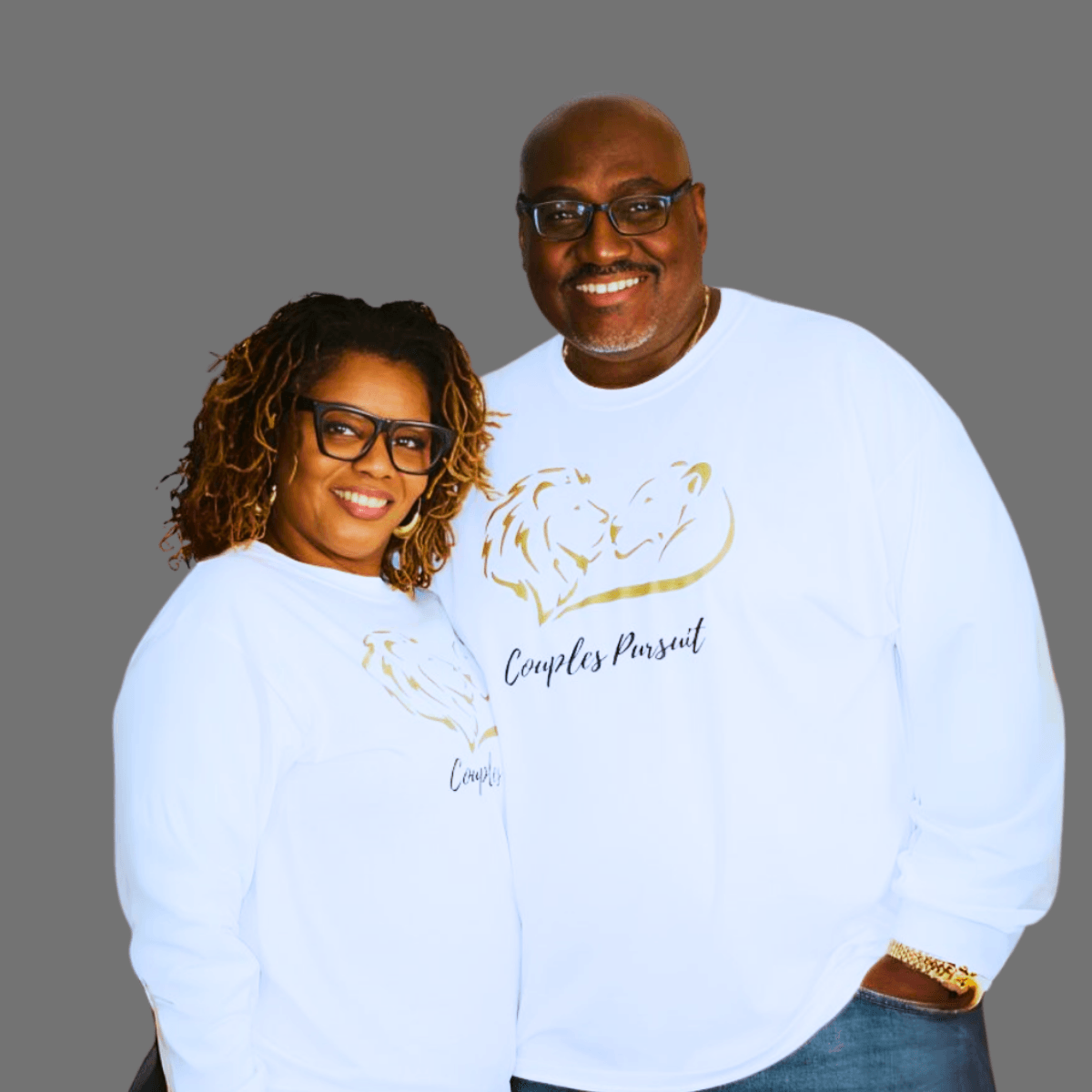
Vincent and Valerie Woodard are the founders of Couples Pursuit. Married since 2000, they specialize in restoring marriages that feel beyond repair using biblical principles. Connect with them at www.couplespursuit.com.
Want more posts like this one?
We send practical, biblical marriage help to your inbox.
No spam. Just honest content for real couples.
Need to Talk?
Are You Tired of Feeling Disconnected From Your Spouse or Future Spouse?
Book Your FREE 15-Minute
Strategy Session Today!
Our Coaching is based on:
The 5 Marriage Mandates™
Method
Many books offer quick fixes or surface-level advice. But “The 5 Marriage Mandates™” dives deep, addressing the real challenges couples face today.

What Is the Root Issue in Your Marriage?
Take the Free 5 Marriage Mandates™ Quiz. No right or wrong answers...
Just honest ones.

Are You Tired of Feeling Disconnected From Your Spouse or Future Spouse?

FREE 15-Minute Strategy Session
Book Your FREE 15-minute Relationship Restoration Roadmap call with Vincent & Valerie TODAY!
*We respect the rights of all individuals. However, our services may not be appropriate if you identify as LGBTQ, have an untreated addiction, are being physically abused, or are currently involved in an extramarital relationship.




Couples Pursuit is a subsidiary of Woodard Worldwide LLC.
@2026 Couples Pursuit | Privacy policy | Legal | Terms & Conditions