What Is the Root Issue in Your Marriage?
What Is the Root Issue in Your Marriage?

Marriage Counseling & Restoration
The Boundary That Saved Our Marriage

When love requires saying no to unhealthy patterns...
Lisa watched her husband walk through the door at 9:47 PM.
The dinner she'd made was cold on the counter.
Their daughter had asked three times where Daddy was during bedtime stories.
And once again, she found herself going to bed feeling like she was married to a ghost.
"I'm working for us," he'd say whenever she brought it up.
"I'm trying to provide for our family."
She loved his work ethic.
She appreciated his dedication to providing.
But somewhere along the way, "providing" had become an excuse for being absent from everything that actually made their family worth providing for.
For months, Lisa had convinced herself that being a "good wife" meant not complaining, not making demands, not setting limits on behavior that was slowly killing their marriage.
Then one Tuesday night, after missing their daughter's school play for the third client dinner that month, Lisa did something that terrified her.
She set a boundary.
"I need you to be home for dinner three nights a week. Not work calls, not emergencies, not client meetings.
Home. With us. Starting this week."
"That's not realistic," he responded immediately. "You don't understand the pressure I'm under."
"And you don't understand the pressure I'm under," she said quietly.
"I'm raising our daughter basically as a single mom while being married. That's not sustainable."
Was she being unreasonable? Controlling? Selfish?
Or was she finally doing what love actually required?
The Misunderstanding That's Killing Christian Marriages
Here's what nobody tells you about boundaries in marriage: most couples think boundaries are the opposite of love, when actually, boundaries are how love protects itself.
We've been sold a dangerous lie that love means never saying no, never setting limits, never requiring anything from our spouse. We think that boundaries are selfish, unloving, or controlling.
So we enable destructive patterns in the name of "being loving." We accept behavior that damages our marriage because we think that's what good spouses do.
We avoid difficult conversations because we don't want to seem demanding.
The result?
Marriages that slowly die from a thousand small compromises, where "keeping the peace" actually destroys the very thing we're trying to protect.
But what if I told you that boundaries aren't the enemy of love—they're love's best friend?
What God Actually Says About Boundaries
The very first marriage gives us a beautiful picture of healthy boundaries. In Genesis 2:25, it says Adam and his wife "were both naked and felt no shame."
This isn't just about physical nakedness—it's about complete emotional, spiritual, and relational transparency without fear.
But here's what's crucial: shame-free vulnerability is only possible when safety exists.
You can only be "naked and unashamed" when you know you won't be taken advantage of, manipulated, or hurt by your openness.
Boundaries create that safety.
When couples establish healthy boundaries—what behavior is acceptable and what isn't, how they'll handle conflict, what their non-negotiables are—they create a space where both people can be completely vulnerable without fear.
Proverbs 27:5 says, "Better is open rebuke than hidden love."
Sometimes love requires saying hard things, setting limits, and refusing to enable destructive patterns.
Love without boundaries isn't really love at all—it's people-pleasing that slowly kills relationships.
Why We're Afraid of Setting Boundaries
Most couples, especially Christian couples, resist setting boundaries because:
We think boundaries are selfish. We've been taught that love is always selfless, always giving, always accommodating. But there's a difference between serving your spouse and enabling them. Between being loving and being a doormat.
We're afraid of conflict. Setting boundaries usually means difficult conversations. It means your spouse might not like what you're saying. Many couples would rather suffer in silence than risk a fight.
We confuse boundaries with control. Boundaries aren't about controlling your spouse—they're about controlling your own responses. You can't make your spouse change, but you can decide what you will and won't accept.
We mistake enabling for love. When we consistently rescue our spouse from the consequences of their behavior, we think we're being loving. Actually, we're preventing them from experiencing the natural results that might motivate change.
We don't want to seem "unsubmissive" or "demanding." Many Christian wives especially struggle here, thinking that being a godly wife means never setting limits. But biblical submission doesn't mean accepting destructive behavior—it means working together toward God's design for marriage.
The Boundary That Changed Everything for Us
Let me tell you about the boundary that saved our marriage.
During our worst season, I (Vincent) had developed a pattern that was slowly poisoning our relationship.
When Valerie would try to address problems, I would shut down, walk away, or explode in anger. I told myself I was "avoiding conflict," but really, I was avoiding responsibility.
This pattern was destroying Valerie's trust and making her feel like she couldn't talk to me about anything important.
She started shutting down too, which created even more distance between us.
Finally, during one of our sessions with our counselor, Valerie set a boundary that changed everything:
"I will not continue conversations when you shut down or walk away.
If you need time to process, that's fine—but you need to tell me that and give me a time when we'll come back to finish the conversation.
If you walk away without setting a return time, I'll wait 24 hours and then I'm going to make the decision myself."
Was I happy about this boundary? No.
Did it feel loving in the moment? No.
But it forced me to face the reality of what my behavior was doing to our marriage.
It made me take responsibility instead of just avoiding. And ultimately, it created safety for both of us—she knew she wouldn't be abandoned mid-conversation, and I knew I could ask for processing time without feeling cornered.
That boundary didn't hurt our relationship—it healed it.
What Healthy Marriage Boundaries Look Like
Boundaries aren't about building walls between you and your spouse. They're about creating a safe space where your marriage can thrive. Here are some examples of healthy marriage boundaries:
Communication Boundaries:
We will speak to each other with respect, even during conflict
We will not use name-calling, insults, or character attacks
We will not bring up past issues during current conflicts
We will take breaks during heated arguments and agree on when to return
Financial Boundaries:
We will discuss any purchase over $[agreed amount] before buying
We will have monthly budget meetings to stay aligned
We will not make major financial decisions without both agreeing
We will be completely transparent about spending and debt
Time and Priority Boundaries:
We will protect time for our marriage relationship
Work/other commitments cannot consistently override family time
We will prioritize our marriage over extended family demands
We will both contribute to household and parenting responsibilities
Physical and Emotional Boundaries:
We will not tolerate any form of abuse (physical, verbal, emotional, financial)
We will respect each other's need for personal space and time
We will not share marriage problems with people who can't help us solve them
We will agree on appropriate boundaries with friends of the opposite sex
Spiritual Boundaries:
We will pursue God together as a couple
We will not let church activities consistently interfere with family time
We will pray together about major decisions
We will seek biblical counsel when we can't resolve issues alone
How to Set Boundaries Without Destroying Your Marriage
Setting boundaries is an art, not a weapon. Here's how to do it in a way that builds your marriage instead of damaging it:
1. Start with Your Own Motivation Ask yourself: Am I setting this boundary to punish my spouse, or to protect our marriage? Boundaries motivated by love look different than boundaries motivated by anger.
2. Use "I" Statements, Not "You" Accusations Instead of: "You never prioritize our family." Try: "I need us to have protected family time that doesn't get interrupted by work."
3. Be Specific and Clear Vague boundaries don't work. Instead of "I need you to help more," try "I need you to handle bedtime routine three nights a week so we can share parenting responsibilities."
4. Explain the Why Help your spouse understand that this boundary is about protecting something you both value. "I'm asking for this because I want us to stay emotionally connected" sounds different than just making demands.
5. Be Prepared for Resistance Your spouse might not like the boundary initially. That's normal. Stay calm, reaffirm your love for them, but don't back down from reasonable limits.
6. Focus on What You Can Control You can't control your spouse's response, but you can control your own actions. "If this continues, I will..." not "You better stop or else."
7. Be Consistent Boundaries only work if they're enforced. If you set a limit and then don't follow through, you're teaching your spouse that your boundaries don't matter.
When Boundaries Feel Impossible to Set
Sometimes you know you need boundaries, but the thought of setting them feels overwhelming. Maybe because:
Your spouse has explosive reactions to any limits. Start small. Set one small boundary that's easy to maintain, and build from there. Sometimes people react strongly because they're not used to boundaries, not because the boundary is wrong.
You're afraid they'll leave. A marriage that can only survive without any boundaries isn't really a marriage—it's a hostage situation. If your spouse would leave rather than respect basic limits, that tells you everything you need to know about their commitment.
You don't know what's reasonable to ask for. This is where community, counseling, or mentoring becomes crucial. Get outside perspective on what healthy marriage relationships look like.
You feel guilty for having needs. God designed you to have needs, and it's not selfish to express them clearly. Your spouse can't meet needs they don't know about, and they can't respect boundaries that don't exist.
You're afraid of being seen as controlling. There's a difference between controlling someone else's behavior and setting limits on what you'll accept. You have every right to decide what kind of treatment you will and won't tolerate.
The Truth About Boundaries and Love
Here's what we've learned after 24 years of marriage: boundaries don't limit love—they create space for love to flourish.
When both spouses know what's expected, what's acceptable, and what isn't, they can relax into the relationship.
There's no guessing, no walking on eggshells, no wondering if they're about to cross a line.
Boundaries create safety. And in that safety, intimacy can grow.
Think about it: you're most yourself with people who have clear expectations and healthy limits. You know where you stand, what they value, and how to love them well.
A marriage without boundaries is like a garden without a fence—everything gets trampled, nothing is protected, and eventually, nothing beautiful can grow.
The Biblical Standard: Your "Center of Spec"
In technical terms, calibration means comparing an instrument to a known standard to ensure accuracy. In marriage, that standard is God's design for how husbands and wives should treat each other.
The "Center of Spec"—God's ideal—gives us the target we're calibrating toward:
Mutual respect and honor
Sacrificial love that seeks the other's best
Transparency without shame
Partnership in all areas of life
Forgiveness and grace when failures happen
When your marriage starts drifting from this standard—when respect disappears, when selfishness takes over, when dishonesty creeps in—boundaries help bring things back into alignment.
Regular calibration prevents major breakdowns.
Your Marriage Maintenance Check
Just like cars need regular tune-ups, marriages need regular calibration. Here's how to do a healthy boundary check with your spouse:
Monthly Marriage Maintenance Questions:
What's working really well in our relationship right now?
Where do we feel disconnected or frustrated?
Are there any patterns developing that concern us?
What do we need more of from each other?
What do we need less of?
Are there any boundaries we need to establish or adjust?
This isn't about finding fault—it's about fine-tuning your relationship before small issues become big problems.
Your Next Steps
If you're realizing your marriage needs better boundaries, here's how to start:
This week: Identify one pattern in your marriage that's causing ongoing frustration or distance. Don't try to solve it yet—just name it clearly.
This month: Have a gentle conversation with your spouse about that pattern. Use "I" statements to express how it affects you and what you need. "I feel disconnected when [specific behavior happens]. I need [specific change] to feel close to you."
This season: Implement one clear, specific boundary around that issue. Start small, be consistent, and focus on protecting your marriage rather than punishing your spouse.
Remember: setting boundaries isn't about being mean—it's about being clear. It's not about control—it's about creating safety. It's not about limiting love—it's about protecting the space where love can grow.
The boundary that Lisa set with her husband? It saved their marriage. Not because it forced him to change, but because it forced both of them to have honest conversations about what they really wanted their family to look like.
He didn't like the boundary at first. But when he saw how much more connected they all were when he was actually present, he realized that the limitation had set him free to be the husband and father he actually wanted to be.
Sometimes love requires saying no to unhealthy patterns so you can say yes to everything God intended your marriage to be.
Your marriage is worth protecting. Your needs are worth expressing. And your spouse is worth the difficult conversations that create safety for both of you.
The boundary your marriage needs might be the very thing that saves it.
Ready to learn how to set healthy boundaries that protect your marriage instead of damaging it?
We've helped hundreds of couples create safety and intimacy through biblical boundary-setting. Book a conversation with us and discover how boundaries can save your marriage too.
Want weekly insights on building stronger marriages? Join thousands of couples at www.couplespursuit.com.
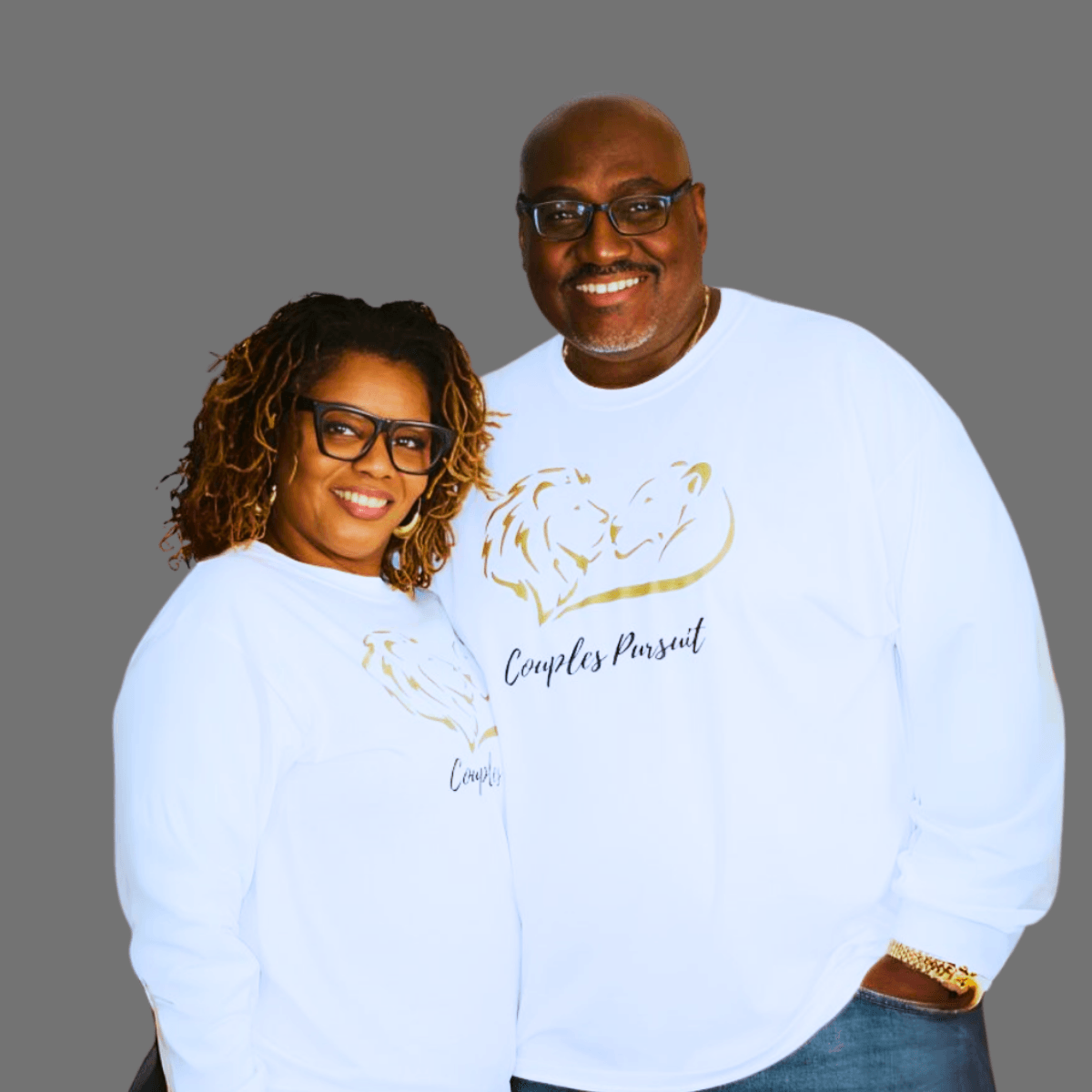
Vincent and Valerie Woodard are the founders of Couples Pursuit. Married since 2000, they specialize in restoring marriages that feel beyond repair using biblical principles. Connect with them at www.couplespursuit.com.
Want more posts like this one?
We send practical, biblical marriage help to your inbox.
No spam. Just honest content for real couples.
Need to Talk?
Are You Tired of Feeling Disconnected From Your Spouse or Future Spouse?
Book Your FREE 15-Minute
Strategy Session Today!
Our Coaching is based on:
The 5 Marriage Mandates™
Method
Many books offer quick fixes or surface-level advice. But “The 5 Marriage Mandates™” dives deep, addressing the real challenges couples face today.

What Is the Root Issue in Your Marriage?
Take the Free 5 Marriage Mandates™ Quiz. No right or wrong answers...
Just honest ones.

Are You Tired of Feeling Disconnected From Your Spouse or Future Spouse?

FREE 15-Minute Strategy Session
Book Your FREE 15-minute Relationship Restoration Roadmap call with Vincent & Valerie TODAY!
*We respect the rights of all individuals. However, our services may not be appropriate if you identify as LGBTQ, have an untreated addiction, are being physically abused, or are currently involved in an extramarital relationship.




Couples Pursuit is a subsidiary of Woodard Worldwide LLC.
@2026 Couples Pursuit | Privacy policy | Legal | Terms & Conditions