What Is the Root Issue in Your Marriage?
What Is the Root Issue in Your Marriage?

Marriage Counseling & Restoration
What Is a Covenant Marriage? (And Why It Changes Everything)

The complete guide to understanding the sacred promise that holds a marriage together
Most couples made vows. Fewer understand what covenant actually means. This complete guide explains what a covenant marriage is, why it matters, and how to honor it when everything is hard.
In This Guide:
Aaron looked at me across the counseling table, exhausted.
"I keep asking myself if this is even worth saving."
Twelve years in and his marriage had become something he managed instead of something he was committed to. Two people going through the motions. Functional on the outside. Empty on the inside. The love was not gone, exactly. But the sense of being truly bound to each other, the sense that this was something bigger than how either of them felt on a given day, that had faded somewhere along the way.
I asked him one question: "Do you see your marriage as a contract or a covenant?"
He looked up. Like that was not the question he was expecting.
That question changes everything. Because the answer determines how you hold your marriage when it is hard, what you believe is possible, and whether the foundation you built it on is strong enough to withstand the weight of a real life.
This guide is the complete answer to that question. What a covenant marriage is, why it is different from what most people have, and how to build one, or rebuild one, starting right where you are.
The Question Most Couples Never Ask
Most couples enter marriage with a general sense that they are making a serious commitment. They mean the vows. They intend to stay. They are not approaching the altar with any plan to leave.
But meaning the vows and understanding what the vows actually establish are two different things. And most couples, even faithful, church-going, God-fearing couples, have never sat down and asked the foundational question: is our marriage a contract or a covenant?
A contract is made between two people who want a specific outcome but do not fully trust each other to deliver it. So they put terms on paper. Conditions. Obligations. And the contract holds as long as both parties perform. When one stops performing, the other is released.
A covenant is something different at its core. It is an unconditional promise. Not "I will do this if you do that." Just "I will." It is the kind of commitment that does not depend on the other person's performance to remain valid. It is what God Himself models when He makes promises to His people. He does not attach exit clauses. He does not release Himself when the other party fails. He holds the covenant because He is faithful, not because the other party has earned it.
Most marriages, even Christian ones, are functioning as contracts. Every unspoken condition, every "I'll keep giving if you keep giving," every quiet scoreboard is a contract. And contracts under enough pressure will always find their breaking point.
Covenants hold. Not because the people in them are perfect. But because the promise is bigger than both of them.
The Covenant Mandate: What God Designed
The Covenant Mandate is the first of the 5 Marriage Mandates we teach, and it is first for a reason. It is the foundation. Everything else, commitment, communication, connection, calibration, is built on top of it. You cannot build anything that holds without this underneath it.
The Covenant Mandate says: "I acknowledge and accept that marriage is a covenant relationship between my spouse, myself, and God. I commit to honoring this sacred bond and working toward restoration when it has been damaged."
The key phrase is "and God." Covenant marriage is not a two-party agreement. It is a three-strand cord. Husband. Wife. God. Ecclesiastes 4:12 says a cord of three strands is not easily broken. The Hebrew word for covenant, berith, describes something unconditional and sacrificial. Not transactional. Not conditional. Sacrificial.
This is what makes covenant marriage structurally different from everything the culture offers as an alternative. The culture offers a marriage built on feelings, on compatibility, on mutual benefit. When those things change, which they will, the structure that held the marriage together changes with them.
Covenant builds on something that does not change. The faithfulness of God woven into the center of the marriage. His presence as the third strand. His design as the standard. When your feelings change, and they will, the covenant does not. When your spouse disappoints you, and they will, the covenant does not respond to disappointment the way a contract does. It holds. Because the promise was never contingent on perfection.
Covenant changes the question from "should we stay" to "how do we get through this." That shift alone changes the trajectory of a marriage.
The House Illustration: Covenant vs. Contract
Here is the clearest picture we have found for what covenant marriage actually means in practical terms.
Think about buying a house. When you sign those papers, you are not just getting a place to live. You are making a long-term commitment to maintain it, invest in it, and protect its value. You take out a mortgage. You call the repairman when the roof leaks. You do not walk away when the pipes burst or the foundation shifts. You fix it. Because you are invested. Because this is yours and you are responsible for it.
A contract says: I will stay as long as the terms are met.
A covenant says: I am staying because I gave my word. And my word means something.
The difference is not just philosophical. It is practical. A contract-based marriage starts asking "is this worth it" the moment the conditions get hard. A covenant marriage asks "how do we fix this" because walking away is not the default response to difficulty.
Aaron came back three months after that first session. He told us: "I decided to honor the covenant regardless of how I felt. That changed everything." Not because his wife immediately became easier to be married to. Because he stopped approaching the marriage as something he was evaluating and started approaching it as something he was responsible for.
That is what covenant does. It changes your posture from consumer to steward. From evaluator to partner.
When the Marriage Feels Like a Contract
If you are honest, most struggles in marriage can be traced back to a moment when the marriage quietly shifted from covenant to contract. Not a dramatic moment. A gradual one.
Contract thinking sounds like: "I have been giving more than I am getting." "If things do not change, I am done." "I have done my part. Now it is your turn." "You do not appreciate what I bring to this marriage." Every one of those sentences is covenant language that has slipped into contract language. Scorekeeping. Conditions. Performance monitoring.
The drift into contract thinking is not a moral failure. It is a natural human response to sustained pain or unmet expectation. When you give and do not feel received, the self-protection mechanism starts running. And self-protection and covenant cannot fully coexist. One will always push against the other.
The way back is not willpower. It is remembering what you actually signed up for. Not a transaction where both parties perform. A covenant where you are the one who holds it regardless. Not because your spouse deserves it. Because God does. And because the person you promised to be on your wedding day is still the person you want to be.
Go deeper:
When You Are Ready to Give Up on the Covenant
There is a specific moment in a struggling marriage when the covenant stops feeling like something worth holding and starts feeling like a cage. The vows that once felt like an anchor start feeling like chains. And the honest question underneath all the exhaustion is not "do I love this person" but "is this promise still something I can keep?"
That moment is real. It deserves to be acknowledged honestly rather than spiritually bypassed with platitudes about commitment.
What we have learned from sitting with couples in that moment is this: the desire to give up on the covenant is almost never actually about the covenant. It is about the pain. The unaddressed wounds. The exhaustion of fighting for something that does not seem to be fighting back. The accumulated weight of being disappointed by someone who was supposed to be your safe place.
The covenant is not the problem. The covenant is what is still holding you at the table when everything else says leave. And the question worth sitting with is not whether the covenant is worth honoring. It is what specific things are making it feel impossible right now, and whether those things have been genuinely addressed.
Go deeper:
When the Covenant Has Been Broken by Betrayal
Infidelity is the most direct violation of marriage covenant. It is not just a relational wound. It is a covenant wound. The promise was broken at the most fundamental level, and everything that follows, the grief, the distrust, the feeling of the floor shifting, flows from that specific rupture.
What most people do not know is that a broken covenant is not the same as a dissolved covenant. The breaking of a covenant does not automatically end it. It creates damage that must be addressed, wounds that must be healed, trust that must be rebuilt over time. But the covenant itself, the three-strand cord with God in the center, is still there. Still intact in the sense that both people are still married. Still capable of being honored going forward.
The question after betrayal is not "is the covenant over" but "are both people willing to do the work that honoring it now requires." That work is harder than anything that came before it. It is also, for the couples who do it, the work that produces the deepest and most tested version of the marriage.
Covenant does not guarantee that restoration is possible in every case. It does mean that God's redemptive heart is always oriented toward it. And that the couple who chooses to do the work has a God who does not simply observe that work from a distance but participates in it.
Go deeper:
When One Spouse Honors the Covenant and the Other Does Not
One of the most painful places in a covenant marriage is the asymmetry of one person holding it and the other not. You are honoring the promise. Your spouse, for whatever reason, is not. And the isolation of that, the loneliness of being faithful to something the other person seems to have let go of, is one of the heaviest things a married person can carry.
The covenant does not require symmetry to remain valid. Your faithfulness to it is not contingent on your spouse's faithfulness to it. That is what makes it a covenant rather than a contract. You hold it not because your spouse has earned it but because God is the third strand and your promise was made before Him.
That does not mean you carry an unhealthy situation indefinitely without help. It does not mean you accept harm in the name of faithfulness. What it means is that your decision about how to move forward comes from a place of covenant integrity rather than from a place of reactivity. You are not abandoning the promise because your spouse abandoned it. You are making a considered, honest, supported decision about what faithfulness requires in this specific situation.
That distinction matters. It protects you from making permanent decisions in temporary emotional states. And it keeps God in the center of the decision, which is exactly where He should be.
Go deeper:
What Covenant Marriage Looks Like in Real Life
Covenant is not a feeling. It is not a season. It is not the warm glow of a wedding day or the easy affection of early marriage. It is a daily orientation toward the promise you made.
In real life, covenant marriage looks like choosing your spouse on days when you do not feel like it. Like staying in the room for the hard conversation when your instinct is to leave. Like seeking help before you reach the breaking point rather than after. Like remembering, when the marriage is at its hardest, that God is in the center of it and that His design for it has not changed just because your circumstances have.
It looks like Ephesians 5:25, a husband loving his wife the way Christ loved the church, not when she has earned it, not when it is easy, but as an act of covenant faithfulness that mirrors God's own character. And it looks like a wife honoring that love with the same unconditional quality, not as a subordinate but as a partner in the sacred work of building something that reflects heaven.
Covenant marriage is God's first institution. His original demonstration to the world of what His love for humanity looks like when it is embodied in flesh. That is the thing you are building. The thing you are protecting. The thing worth fighting for.
Go deeper:
When Divorce Feels Like the Only Option Left
The biblical framework for divorce is addressed honestly and directly in Scripture. Jesus acknowledges it. Paul addresses it. The Bible does not pretend it does not exist or that it is never permissible.
What the Bible is clear about is that divorce was never God's design. It exists as a concession to the hardness of human hearts, not as the intended destination of any marriage. And for the couple standing at that edge, the most important question is not whether they are permitted to leave. It is whether they have genuinely done everything within their reach before they reach that conclusion.
Not everything that feels like everything. Actually everything. The counseling, the intensive, the hard honest conversation that was avoided for years, the reaching toward God individually and together. That process matters. Not because God requires you to suffer indefinitely. Because you deserve to know, when the decision is made, that you gave this the full weight of what it deserved.
Go deeper:
The Framework Behind Everything We Teach
Covenant is the first of the 5 Marriage Mandates because it is the foundation of everything else. Commitment is the daily choice to honor the covenant. Communication is the pathway that keeps it alive. Connection is what it produces when both people are fully in it. Calibration is how you protect it through every season of change.
Without Covenant underneath, the other four mandates are techniques without a foundation. And techniques without a foundation collapse under pressure. Every couple has pressure. The question is whether the foundation holds.
The Covenant Mandate says: "I acknowledge and accept that marriage is a covenant relationship between my spouse, myself, and God. I commit to honoring this sacred bond and working toward restoration when it has been damaged."
That commitment is not a guarantee of an easy marriage. It is a guarantee that when the hard things come, and they will, you are not facing them from a position of "should I stay." You are facing them from a position of "how do we get through this." That shift in posture changes everything that follows.
Most marriage issues are not the real issue. The pain, the conflict, the distance, those are symptoms. Underneath them is one of 5 root causes. Find out which one is most active in your marriage right now.
Find your root issue: Take the free 5-minute 5 Marriage Mandates Assessment.
No right or wrong answers. Just honest ones.
Your Next Step
You are here because your marriage matters to you. That matters more than you may realize right now.
The covenant you made was not made in vain. It was made before God and in front of witnesses and with the best version of who you were on the day you made it. That person is still in you. And the promise is still valid.
If you have not taken the assessment, start there. It will show you where your marriage's foundation is strongest and where the covenant is most under pressure right now.
If you are ready to talk with someone, book a free 15-minute Relationship Restoration Roadmap session with us. We work with couples at every stage, from the first cracks in the foundation to the couple who is not sure there is anything left to save. No pressure. Just an honest conversation about where you are and what comes next.
Book a free 15-minute session: couplespursuit.com/talk
Take the assessment: 5marriagemandates.com/quiz
Complete Guide to Covenant Marriage
Every post below is part of this guide. Find where you are and keep reading.
If your marriage feels more like a contract than a covenant:
The scorekeeping and conditions crept in quietly. Here is how to recognize it and what to do about it.
If you are ready to give up and wondering if the covenant is still worth holding:
The desire to leave is not the problem. Here is what is underneath it.
If the covenant has been broken by betrayal: A broken covenant is not the same as a dissolved one. Here is what comes next.
If you are the only one honoring the covenant:
Your faithfulness is not contingent on your spouse's faithfulness. Here is how to carry that without breaking.
If divorce is feeling like the only option left:
The covenant does not require you to suffer indefinitely. Here is what the Bible actually says.
Other Marriage Help Guides
Each guide below covers one of the 5 Marriage Mandates in full. Find the one that describes where your marriage needs the most attention right now.
What Is a Covenant Marriage? (you are here)
How to Save a Marriage - The complete guide for couples on the brink of divorce who are not ready to give up
Communication in Marriage - How to finally say what you mean and hear what your spouse is saying
Intimacy in Marriage - How to rebuild connection across all seven dimensions when the closeness is gone
Healthy Boundaries in Marriage - How to calibrate your marriage before small problems become big ones
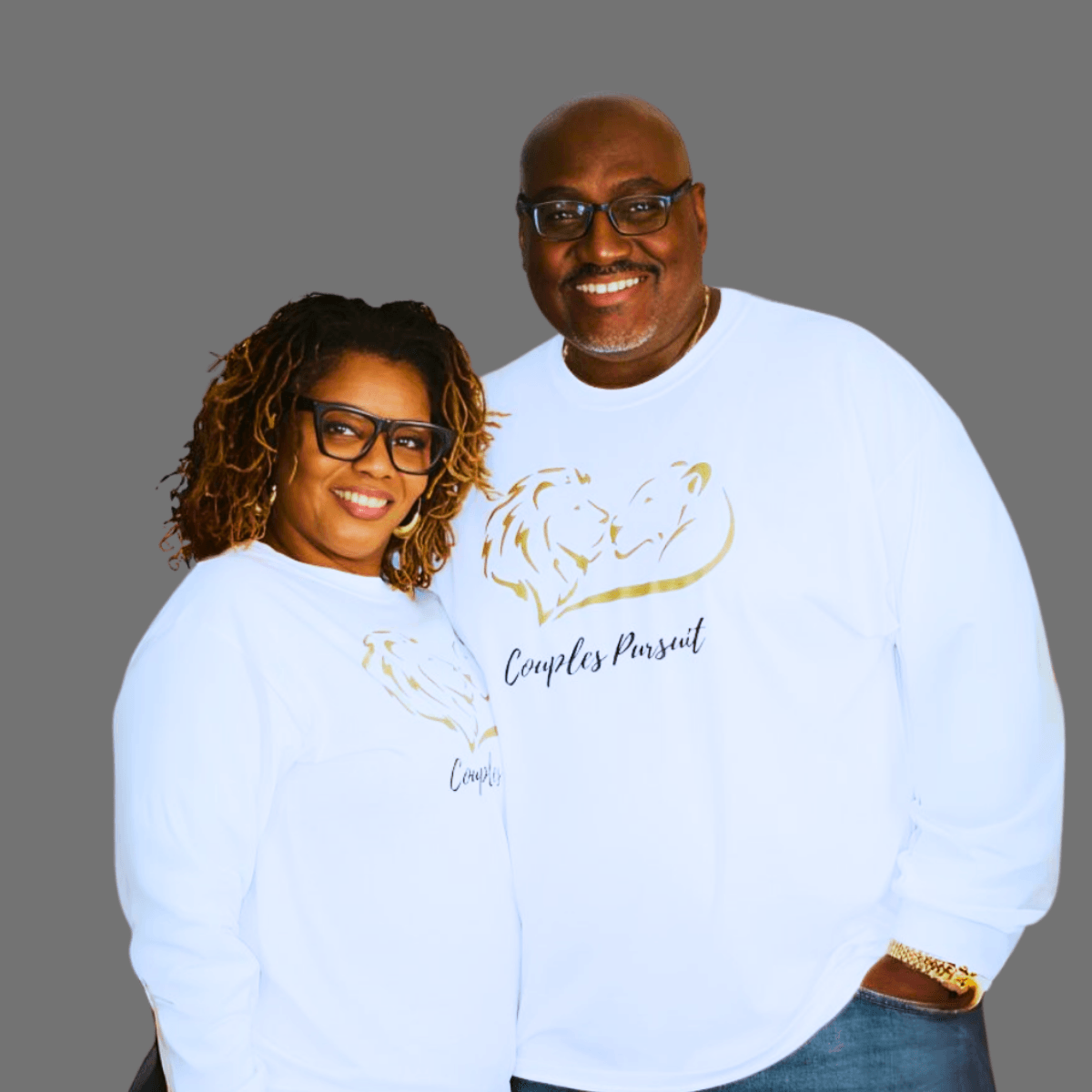
Vincent and Valerie Woodard are the founders of Couples Pursuit. Married since 2000, they specialize in restoring marriages that feel beyond repair using biblical principles. Connect with them at www.couplespursuit.com.
Want more posts like this one?
We send practical, biblical marriage help to your inbox.
No spam. Just honest content for real couples.
Need to Talk?
Are You Tired of Feeling Disconnected From Your Spouse or Future Spouse?
Book Your FREE 15-Minute
Strategy Session Today!
Our Coaching is based on:
The 5 Marriage Mandates™
Method
Many books offer quick fixes or surface-level advice. But “The 5 Marriage Mandates™” dives deep, addressing the real challenges couples face today.

What Is the Root Issue in Your Marriage?
Take the Free 5 Marriage Mandates™ Quiz. No right or wrong answers...
Just honest ones.

Are You Tired of Feeling Disconnected From Your Spouse or Future Spouse?

FREE 15-Minute Strategy Session
Book Your FREE 15-minute Relationship Restoration Roadmap call with Vincent & Valerie TODAY!
*We respect the rights of all individuals. However, our services may not be appropriate if you identify as LGBTQ, have an untreated addiction, are being physically abused, or are currently involved in an extramarital relationship.




Couples Pursuit is a subsidiary of Woodard Worldwide LLC.
@2026 Couples Pursuit | Privacy policy | Legal | Terms & Conditions