What Is the Root Issue in Your Marriage?
What Is the Root Issue in Your Marriage?

Marriage Counseling & Restoration
The Childhood Trauma Your Spouse Won't Talk About

How past wounds keep showing up in your present marriage
Your spouse's childhood trauma is affecting your marriage in ways neither of you fully understand. Discover how past wounds shape present behavior, why your spouse can't just "get over it," and what you both need to heal.
In This Article:
How Childhood Trauma Shows Up in Marriage
Why Your Spouse Can't Just "Get Over It"
What God Says About Healing Old Wounds
The Trauma Responses You're Seeing
What Your Spouse Needs (And What You Need)
Sarah had been married to David for seven years before she finally understood why he disappeared emotionally every time they had a disagreement.
It wasn't that he didn't care. It wasn't that he was trying to hurt her. It wasn't even that he was being stubborn or childish.
David was eight years old again, hiding in his closet while his parents screamed at each other downstairs. Plates breaking. Doors slamming. His mother crying. His father's rage echoing through the house.
Whenever Sarah's voice would rise even slightly during a disagreement, David's brain didn't hear his wife expressing frustration. It heard danger. Threat. The emotional storm that terrified him as a child.
So he did what that eight-year-old boy learned to do: disappear. Emotionally check out. Go completely silent. Become invisible until the danger passed.
Sarah didn't know any of this for seven years. She just knew that every time they had a conflict, her husband would shut down completely. She'd tried everything. Gentle approaches. Direct confrontation. Therapy suggestions. Nothing worked.
Until the night David finally told her about the closet. About the fear. About the little boy who learned that the safest response to raised voices was to vanish.
That conversation changed everything. Not because it magically fixed the problem. But because Sarah finally understood that she wasn't fighting her husband's stubbornness. She was fighting his childhood survival mechanism.
If you've ever felt like you're married to someone whose reactions don't match the situation, whose triggers seem out of proportion, whose walls seem impenetrable... you might be dealing with unresolved childhood trauma. And understanding that changes everything about how you approach your marriage.
How Childhood Trauma Shows Up in Marriage
Childhood trauma doesn't stay in childhood. It follows people into adulthood and shows up in their marriages in ways that often confuse both spouses.
Here's what most people don't understand: trauma isn't just about what happened. It's about what your spouse's developing brain learned about safety, love, trust, and relationships during critical years.
When children experience trauma (abuse, neglect, witnessing violence, loss, instability), their brains develop survival strategies. These strategies helped them survive their childhood. But in adult relationships, those same strategies often create the very problems they're trying to prevent.
Here are the most common ways childhood trauma shows up in marriage:
Overreaction to minor conflicts. Your spouse responds to small disagreements as if they're catastrophic threats. A conversation about dishes in the sink turns into your spouse completely shutting down or exploding in anger. This isn't about the dishes. It's about what conflict meant in their childhood home.
Difficulty trusting even when you're trustworthy. No matter how consistent you are, your spouse struggles to trust you. They're waiting for the other shoe to drop. For you to leave. For you to hurt them. Because in their experience, people who were supposed to love them ended up hurting them.
Emotional shutdown or withdrawal. When things get intense, your spouse disappears emotionally. They can't access their feelings. They can't tell you what's wrong. They just go blank. This is a trauma response called dissociation... their brain's way of protecting them from overwhelming emotion.
Hypervigilance about perceived rejection. Your spouse reads rejection into neutral statements or actions. You mention you're tired, and they hear "I don't want to spend time with you." You're quiet, and they assume you're mad. This comes from childhood experiences where small signs predicted danger.
Difficulty with intimacy and vulnerability. Your spouse struggles to open up emotionally or physically. They keep walls up even after years of marriage. Vulnerability feels dangerous because in their childhood, being vulnerable meant getting hurt.
People-pleasing to avoid conflict. Your spouse agrees to everything, never expresses needs, and sacrifices constantly to keep the peace. This comes from learning that having needs or opinions led to punishment or abandonment.
Controlling behavior. Your spouse needs to control everything... schedules, finances, decisions, even emotions. This comes from childhood chaos. If they control everything now, they feel safe from the unpredictability that traumatized them as a child.
Struggles with anger. Either your spouse can't express anger at all (learned it was dangerous) or they explode disproportionately (learned that's how conflict works). They never learned healthy anger expression because they didn't see it modeled.
Understanding these patterns doesn't excuse harmful behavior. But it does help you understand that you're not dealing with a character flaw. You're dealing with a wound.
For more on understanding emotional disconnect in marriage, read our article on feeling like strangers.
Why Your Spouse Can't Just "Get Over It"
This is the most frustrating part for many spouses: "Why can't they just move on? Why can't they see that I'm not their parent? Why does the past have to keep affecting our present?"
Here's why: trauma literally changes the brain. This isn't about willpower or choosing to dwell on the past. It's about neurobiology.
When a child experiences ongoing trauma, their developing brain adapts to survive that environment. The amygdala (the brain's threat detection system) becomes hypersensitive. The prefrontal cortex (the thinking, reasoning part) doesn't develop normally. The stress response system gets stuck in overdrive.
These changes persist into adulthood. Which means:
Your spouse's brain genuinely perceives threats that don't exist. When you raise your voice slightly, their amygdala fires as if they're in danger. It's not a choice. It's an automatic response.
Their emotional regulation is compromised. They go from zero to ten quickly, or they shut down completely. The middle ground that comes naturally to people without trauma doesn't come naturally to them.
They have implicit memories that trigger without conscious awareness. They might not even remember specific traumatic events, but their body remembers. A tone of voice. A facial expression. A situation. It triggers a response before they can think about it.
Their attachment system is disrupted. If their early caregivers were unsafe, unpredictable, or absent, your spouse's brain learned that closeness equals danger. They want intimacy but their nervous system treats it as a threat.
They developed coping mechanisms that worked in childhood but don't work in marriage. Shutting down protected them from an abusive parent. But shutting down damages connection with a loving spouse.
This doesn't mean they can't heal. It doesn't mean they're broken beyond repair. But it does mean that healing requires more than just deciding to "get over it."
Healing from childhood trauma usually requires professional help. Not because your spouse is weak. But because rewiring trauma responses in the brain requires specialized therapy techniques that you can't provide as a spouse.
If you're dealing with persistent patterns that seem rooted in past trauma, marriage counseling with a trauma-informed therapist can make a significant difference.
What God Says About Healing Old Wounds
Some Christians struggle with the concept of childhood trauma affecting adulthood. "Isn't God supposed to make us new? Why are we still dealing with the past?"
But Scripture actually has a lot to say about how our past affects our present, and about God's process of healing deep wounds.
Psalm 147:3 tells us: "He heals the brokenhearted and binds up their wounds." Notice it doesn't say He instantly removes all wounds. It says He heals and binds... a process that takes time.
Isaiah 61:1 describes Jesus' mission: "to bind up the brokenhearted, to proclaim freedom for the captives and release from darkness for the prisoners." People with childhood trauma are captives to their past. Jesus came to release them. But release is often a process, not an instant transformation.
Jeremiah 17:14 is a prayer for healing: "Heal me, Lord, and I will be healed; save me and I will be saved." The prophet recognized his need for God's healing touch for deep wounds.
And Proverbs 18:14 acknowledges the reality: "The human spirit can endure in sickness, but a crushed spirit who can bear?" Some wounds go so deep that they crush the spirit. These aren't fixed with a Bible verse and a prayer. They require deep healing work.
Jesus Himself addressed how the sins of the fathers affect children. In John 9, when the disciples asked whose sin caused a man's blindness, Jesus corrected their understanding. Sometimes people suffer not because of their own sin, but because of the broken world they were born into. That includes children who suffer from their parents' choices.
God absolutely can heal trauma. But His healing often comes through a process that includes:
Acknowledging the wound (not pretending it doesn't exist)
Grieving what was lost (the childhood that should have been)
Understanding how the wound affects behavior (insight and awareness)
Rewiring thought patterns (renewing the mind, as Romans 12:2 describes)
Creating new experiences of safety and love (often in relationships and therapy)
Time and patience (healing isn't microwave, it's slow cooker)
Expecting your spouse to be instantly healed just because they're a Christian is like expecting a person with a broken leg to run a marathon because they have faith. God can miraculously heal. But He often chooses to heal through a process that honors the complexity of how He made us.
For insights on what healing requires beyond forgiveness, read our article on why forgiveness isn't enough to heal your marriage.
The Four Trauma Responses You're Seeing
When your spouse's childhood trauma is triggered, they typically respond in one of four ways. Understanding these responses helps you recognize what's happening and respond with compassion instead of frustration.
Fight Response
Your spouse becomes aggressive, defensive, or angry when triggered. They might raise their voice, throw things, or say hurtful things. This isn't who they really are. It's their nervous system perceiving threat and going into attack mode to protect themselves.
In childhood, fighting back (or at least being aggressive) helped them feel less powerless. In marriage, this response damages connection and creates the very conflict they're afraid of.
What it looks like: Explosive anger over small things, defensive reactions to gentle feedback, picking fights as a way to create distance when intimacy feels threatening.
Flight Response
Your spouse runs away (literally or emotionally) when triggered. They might leave the room, leave the house, or threaten to leave the relationship. They're not trying to hurt you. They're trying to escape what feels like danger.
In childhood, running away or escaping into their room, a book, or fantasy was how they protected themselves. In marriage, this response leaves you feeling abandoned and creates the disconnection they're afraid of.
What it looks like: Walking out during arguments, emotionally checking out, threatening divorce when things get hard, staying late at work to avoid going home, losing themselves in hobbies or screens.
Freeze Response
Your spouse shuts down completely when triggered. They can't speak, can't move, can't think clearly. This isn't stubbornness or the silent treatment. This is their nervous system literally freezing to survive perceived danger.
In childhood, freezing (becoming invisible, not reacting) was how they survived situations where they couldn't fight or run. In marriage, this response makes you feel like you're talking to a wall and creates the disconnection they're afraid of.
What it looks like: Going completely silent during conflict, staring blankly when you try to talk, seeming unable to access thoughts or feelings, shutting down emotionally.
Fawn Response
Your spouse becomes excessively agreeable, apologetic, or people-pleasing when triggered. They lose themselves trying to keep you happy. They can't say no. They have no opinions of their own. They're constantly trying to anticipate your needs and meet them.
In childhood, being whatever their caregiver needed them to be kept them safe. If they were good enough, helpful enough, invisible enough, they avoided punishment or abandonment. In marriage, this response prevents real intimacy because you never get to know who they really are.
What it looks like: Never disagreeing even when they have a different opinion, constant apologizing, taking blame for things that aren't their fault, ignoring their own needs to meet yours, anxiety about your moods.
Most trauma survivors have a primary response but can show all four depending on the situation. The key is recognizing these aren't character flaws. They're survival mechanisms from childhood that need healing and replacement with healthier responses.
Understanding trauma responses helps you see patterns in your spouse's behavior. If you notice shutdown patterns, our article on when your spouse shuts down offers additional strategies.
What Your Spouse Needs From You
If your spouse is dealing with unresolved childhood trauma, here's what they need from you:
Patience without enabling. They need time to heal. Trauma doesn't resolve quickly. But patience doesn't mean accepting abusive behavior or living with harm. You can be patient with their process while still setting boundaries about what you will and won't accept.
Safety without rescuing. They need to feel safe with you. This means being predictable, keeping your word, and not punishing them for their trauma responses. But safety doesn't mean you rescue them from all discomfort or protect them from necessary consequences.
Compassion without taking responsibility. They need you to understand that their reactions often aren't about you. But compassion doesn't mean you take responsibility for fixing them or healing their trauma. That's work they have to do, ideally with professional help.
Consistency without perfection. They need you to be consistent in how you treat them. Unpredictability triggers trauma survivors. But consistency doesn't mean you have to be perfect. It means you're reliably you, and when you make mistakes, you acknowledge them and repair.
Encouragement to get professional help. They need you to encourage (and sometimes insist on) professional counseling with a trauma-informed therapist. You can't be their therapist. Trying to be puts too much pressure on the marriage and usually backfires.
Your own boundaries. They need you to have your own boundaries about what you can and can't live with. Boundaries actually help trauma survivors because they provide structure and clarity. Boundaries aren't mean. They're necessary for a healthy relationship.
Your own healing. If you're starting to develop anxiety, depression, or trauma symptoms from living with your spouse's trauma responses, you need your own counseling. You can't help them if you're drowning yourself.
For guidance on setting healthy boundaries in difficult marriages, read our post on biblical marriage boundaries.
What You Need When Your Spouse Has Unhealed Trauma
Living with someone who has unresolved childhood trauma is exhausting. You need things too. And your needs matter just as much as your spouse's needs.
You need to stop walking on eggshells. If you're constantly monitoring your tone, your words, and your actions to avoid triggering your spouse, that's not a marriage. That's captivity. You need to be able to be yourself without constant fear of triggering a trauma response.
You need to stop taking their reactions personally. When your spouse has a trauma response, it's not about you. But you keep taking it personally, which creates resentment. You need to learn to separate their trauma from your worth.
You need your own support system. You can't process all of this alone. You need friends, family, or a counselor who understand what you're dealing with and can give you perspective, encouragement, and practical strategies.
You need them to be working on it. You can be patient with the process. But you need to see that your spouse is actually engaged in their healing. Going to therapy. Reading. Trying. Growing. If they're not willing to work on their trauma, you can't heal the marriage alone.
You need to know this isn't forever. With proper help, trauma can heal. Responses can change. Marriages can get better. But if your spouse refuses to get help, you need to accept that this might be what your marriage looks like and decide if you can live with that.
You need clarity about what's trauma and what's character. Not every problematic behavior is trauma. Sometimes people use past trauma as an excuse for current choices. You need help discerning the difference. A good counselor can help you see what's a trauma response and what's a choice.
You need hope. Living with someone's unhealed trauma can make you lose hope that things will ever get better. You need regular reminders that healing is possible, progress is happening (even if slowly), and your marriage can be different than it is today.
If you're struggling with communication because of trauma patterns, our article on why couples can't communicate explores solutions.
When Professional Help Is Essential
Some situations require professional intervention. You need trauma-informed marriage counseling or individual therapy if:
Your spouse's trauma responses are getting worse, not better. If the patterns are escalating over time, they need specialized help that you can't provide.
You're developing trauma symptoms yourself. If you're experiencing anxiety, depression, hypervigilance, or other symptoms from living with your spouse's trauma, you need your own therapist.
There's any form of abuse. If your spouse's trauma responses include physical, emotional, verbal, sexual, or financial abuse, that's beyond what marriage counseling can address. Safety must come first.
Your spouse is self-medicating. If they're using alcohol, drugs, porn, food, or other substances/behaviors to manage their trauma, they need professional help for both the trauma and the coping mechanism.
You've tried everything and nothing is improving. If you've read the books, made changes, set boundaries, and nothing is getting better, you need professional guidance to understand what's missing.
Your children are being affected. If your spouse's trauma responses are creating trauma for your children, that's an emergency. Your kids need protection, and your spouse needs intensive help.
Your spouse has suicidal thoughts or self-harm behaviors. This requires immediate professional intervention. Call 988 (Suicide and Crisis Lifeline) if your spouse is in crisis.
Here's what trauma-informed therapy can do:
Help your spouse understand how their childhood experiences shaped their current responses
Teach them skills to regulate their nervous system when triggered
Process traumatic memories so they're less powerful
Rewire trauma responses and replace them with healthier patterns
Help both of you understand each other better and create safety in the relationship
Give you tools to support your spouse without sacrificing yourself
Trauma therapy isn't about blaming parents or dwelling on the past. It's about understanding how the past affects the present so you can create a different future.
If you're looking for professional help, search for therapists who specialize in trauma treatment (EMDR, somatic therapy, internal family systems) and who also understand marriage dynamics. Couples therapy alone often isn't enough for significant trauma... your spouse may need individual trauma therapy in addition to marriage counseling.
Sarah and David's Journey
Remember Sarah and David from the beginning? Learning about David's childhood trauma was just the start of their healing journey.
Sarah stopped taking David's shutdown personally. Instead of feeling rejected when he went silent, she learned to recognize it as his trauma response and give him space to regulate.
David started individual therapy with a trauma specialist. Through EMDR therapy, he processed the fear and helplessness he felt as that eight-year-old hiding in the closet. The memories didn't disappear, but they lost their power over his present.
Together, they created a plan for what to do when David got triggered. A signal he could give Sarah that meant "I'm triggered and need space." A time frame for how long he could take to regulate before they came back to the conversation. A safe word either of them could use if things were getting too intense.
It wasn't perfect. David still got triggered sometimes. Sarah still got frustrated sometimes. But they were working together instead of against each other.
Three years later, David can stay present during conflicts most of the time. When he does shut down, he can usually articulate what's happening: "I'm feeling that closet feeling. I need fifteen minutes." And Sarah has learned to recognize the early signs and adjust her approach before he fully shuts down.
Their marriage isn't perfect. But it's so much better than the seven years they spent fighting David's childhood ghosts without understanding what they were fighting.
Healing is possible. But it requires understanding, professional help, patience, and both spouses being willing to do the work.
The Truth About Trauma and Marriage
Here's what you need to understand if your spouse has childhood trauma:
It's not your fault. You didn't cause their trauma. You can't fix their trauma. You can support their healing, but you can't heal them.
But it is affecting you. Even though it's not your fault, it's your reality. Living with someone's unhealed trauma affects you. Your needs matter. Your wellbeing matters.
It can get better. With proper treatment, trauma responses can heal significantly. Your spouse can learn to regulate their nervous system, process their wounds, and respond to you instead of to their past.
But only if they're willing to do the work. You can't want their healing more than they want it. If they refuse to acknowledge the trauma or get help, you have decisions to make about what you can live with.
You need help too. Supporting a spouse with trauma is hard work. You need your own therapist, your own support system, and your own healing journey.
Love isn't always enough. You can love your spouse deeply and still need them to get professional help. Love doesn't heal trauma. Love creates the safety for healing to happen, but the actual healing requires specialized treatment.
God can heal. He absolutely can. And He often chooses to heal through the process of therapy, time, safe relationships, and hard work. That's not lack of faith. That's how He designed healing to work.
Your spouse's childhood trauma doesn't have to destroy your marriage. But ignoring it, minimizing it, or expecting them to just "get over it" will destroy your marriage.
Understanding is the first step. Professional help is usually the second. Patience is required throughout. And boundaries protect you both.
The little boy hiding in the closet can heal. The little girl who learned to disappear can learn to be present. The child who was hurt can become an adult who trusts.
But it takes work. Professional work. Holy Spirit work. Hard work.
And if you're the spouse of someone with childhood trauma, you need support too. Because you can't pour from an empty cup. And you can't heal someone else's wounds by sacrificing yourself.
•
Get help. Both of you. Together and separately. It's the best investment you can make in your marriage.
Related Resources:
• Take the 5 Marriage Mandates Quiz to understand which areas of your marriage need calibration
• Find trauma-informed marriage counseling that addresses both past wounds and present patterns
• Read about setting biblical boundaries when living with unhealed trauma
• Understand why couples can't communicate when trauma is involved
• Explore how one person can turn a marriage around even when trauma complicates healing
Ready to address trauma's impact on your marriage?
Professional help makes all the difference. Visit couplespursuit.com to learn about trauma-informed marriage counseling that honors both spouses' needs.
Need immediate support?
If you or your spouse are in crisis: National Suicide Prevention Lifeline: 988 | National Domestic Violence Hotline: 1-800-799-7233
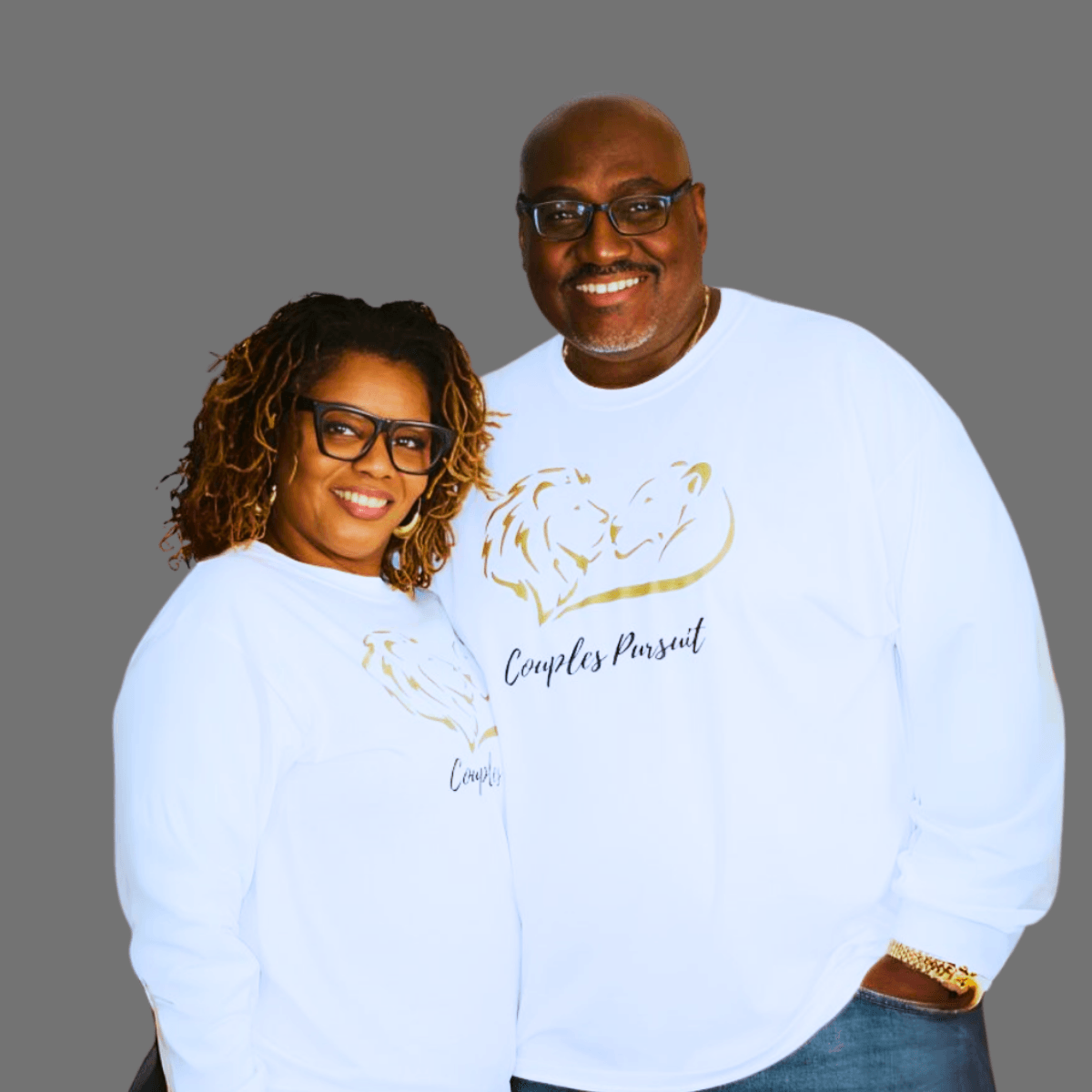
Vincent and Valerie Woodard are the founders of Couples Pursuit. Married since 2000, they specialize in restoring marriages that feel beyond repair using biblical principles. Connect with them at www.couplespursuit.com.
Want more posts like this one?
We send practical, biblical marriage help to your inbox.
No spam. Just honest content for real couples.
Need to Talk?
Are You Tired of Feeling Disconnected From Your Spouse or Future Spouse?
Book Your FREE 15-Minute
Strategy Session Today!
Our Coaching is based on:
The 5 Marriage Mandates™
Method
Many books offer quick fixes or surface-level advice. But “The 5 Marriage Mandates™” dives deep, addressing the real challenges couples face today.

What Is the Root Issue in Your Marriage?
Take the Free 5 Marriage Mandates™ Quiz. No right or wrong answers...
Just honest ones.

Are You Tired of Feeling Disconnected From Your Spouse or Future Spouse?

FREE 15-Minute Strategy Session
Book Your FREE 15-minute Relationship Restoration Roadmap call with Vincent & Valerie TODAY!
*We respect the rights of all individuals. However, our services may not be appropriate if you identify as LGBTQ, have an untreated addiction, are being physically abused, or are currently involved in an extramarital relationship.




Couples Pursuit is a subsidiary of Woodard Worldwide LLC.
@2026 Couples Pursuit | Privacy policy | Legal | Terms & Conditions