What Is the Root Issue in Your Marriage?
What Is the Root Issue in Your Marriage?

Marriage Counseling & Restoration
The One Wedding Vow Most Couples Never Really Mean

What "for better or worse" actually requires.
Amy stood in the oncologist's office, holding her husband's hand as the doctor delivered words that would change everything.
"I'm sorry, but the cancer has spread. We're looking at stage four."
The room went silent except for the hum of fluorescent lights and the distant sound of traffic outside.
David squeezed her hand, but Amy felt like she was falling through space.
They'd been married for three years.
Three beautiful, relatively easy years filled with career growth, weekend getaways, and dreams about the future.
Sure, they'd had their arguments—about money, about whose turn it was to do dishes, about David's tendency to leave socks on the bedroom floor.
But this?
This wasn't supposed to happen.
Not to them.
Not now.
As they drove home in stunned silence, Amy found herself thinking about their wedding day.
She could still see David standing at the altar, tears in his eyes as he promised to take her "for better or for worse, for richer or for poorer, in sickness and in health."
This post is part of our complete guide to covenant marriage. Read the full guide here.
At the time, those words felt like beautiful poetry. Now they felt like a contract she'd never actually read.
"For worse." What did that even mean when they said it?
A bad day at work?
An argument with the in-laws?
Burnt dinner?
They had no idea that "worse" could mean watching the person you love fight for their life.
They never imagined "in sickness" would arrive so soon, so devastating, so completely life-altering.
Looking back, Amy realized they'd said those vows without really meaning them. Not because they didn't love each other, but because they had no idea what they were actually promising.
The Vow That Sounds Beautiful But Costs Everything
"For better or for worse."
It's the most quoted wedding vow, the one that sounds the most romantic, the one that makes everyone in the church tear up a little.
It's also the vow most couples say without having any clue what they're actually agreeing to.
Here's the uncomfortable truth: most couples who say "for better or for worse" are secretly thinking about a very limited definition of "worse."
Maybe you'll lose your job.
Maybe we'll argue more than we'd like.
Maybe one of us will go through a difficult phase.
Maybe we'll have financial stress.
But the "worse" that life actually delivers?
That's a completely different category:
Mental illness that changes your spouse's personality
Addiction that destroys trust and stability
Chronic illness that requires caregiving for decades
Infidelity that shatters everything you believed about your marriage
Death of a child that breaks you both in different ways
Accidents that change physical and mental capacity
Job loss that lasts years, not months
Family crises that consume your time, energy, and resources
The "worse" that actually tests marriages isn't just bad days. It's life-altering circumstances that fundamentally change who you are and how you live.
And most couples have never seriously considered whether their love can survive that kind of worse.
Why We Say It Without Meaning It
We have no frame of reference.
When you're young, healthy, in love, and optimistic about the future, it's impossible to truly comprehend what "worse" might look like.
You say the words, but they're theoretical.
We think love conquers all.
We believe that because we love each other deeply right now, that love will automatically carry us through anything.
We don't realize that love is a choice that has to be made over and over, especially when circumstances make that choice incredibly difficult.
We assume "worse" has limits.
Somewhere in our minds, we think "worse" means temporarily difficult, not permanently life-changing.
We imagine that bad things will happen and then go back to normal.
We focus on the wedding, not the marriage.
Most couples spend more time planning the wedding than they do preparing for the marriage.
We invest in the ceremony but don't invest in understanding what we're actually committing to.
We've never seen it modeled.
Many couples have never witnessed close-up what "for better or worse" actually looks like in real life.
They've seen the highlight reels of other marriages, not the behind-the-scenes reality.
What "For Better or Worse" Actually Requires
Let me tell you what "for worse" looked like for some couples we've counseled:
Sarah's (not their real name) husband developed early-onset dementia at age 52.
For better or worse meant learning to love someone who slowly forgot who she was, who sometimes didn't recognize her, who needed constant care.
It meant grieving the loss of their future while caring for him in the present.
Mike's wife struggled with severe postpartum depression after their second child.
For better or worse meant holding their family together when she couldn't get out of bed, finding help when she didn't think she needed it, and loving someone who temporarily became a stranger.
Jennifer discovered her husband's gambling addiction had put them $80,000 in debt.
For better or worse meant choosing to rebuild rather than run, working three jobs to pay off debt she didn't create, and learning to trust again after devastating betrayal.
Carlos's wife was paralyzed in a car accident six months after their wedding.
For better or worse meant releasing every expectation they had about their life together and building something completely different than they'd planned.
Each of these situations required something that no wedding ceremony prepares you for: the daily choice to love someone when love feels impossible.
The Difference Between a Contract and a Covenant
Here's what most couples don't understand: wedding vows aren't just beautiful promises.
They're a covenant.
A contract is an agreement based on performance. If one party doesn't hold up their end, the contract can be broken.
A covenant is an unbreakable bond based on commitment, not performance.
In biblical times, covenants involved blood—a literal cutting that demonstrated the permanent, sacrificial nature of the commitment.
When God created the first marriage, He put Adam to sleep and took a rib from his side to create Eve.
Blood was shed.
A covenant was cut.
Your wedding vows weren't just pretty words. They were a covenant that says: "No matter what life does to us, no matter how we change, no matter what worse looks like, I choose you."
That's why the vow says "for worse," not "unless things get really bad."
It's why it says "in sickness," not "as long as we're both healthy."
It's why it says "for poorer," not "as long as we're financially stable."
The vows acknowledge upfront that worse is coming. The question is: will you honor your covenant when it arrives?
Why Most Couples Aren't Prepared
According to the National Institutes of Health, 75% of divorced individuals cite lack of commitment as the major contributing factor to their divorce.
When pressed, 70.6% of couples agreed that lack of commitment was the primary reason their marriage failed.
This isn't about not loving each other. It's about not understanding what commitment actually means when it gets tested.
Most couples enter marriage with what we call "fair weather commitment"—they're committed as long as things go reasonably well.
But covenant commitment says: "I'm committed especially when things go badly."
The difference is everything.
Fair weather commitment says: "I'll love you as long as you make me happy."
Covenant commitment says: "I'll love you especially when happiness feels impossible."
Fair weather commitment asks: "Is this marriage good for me?"
Covenant commitment asks: "How can I be good for this marriage?"
Fair weather commitment views problems as reasons to leave.
Covenant commitment views problems as opportunities to go deeper.
What Amy and David Discovered
Back to Amy and David facing the cancer diagnosis.
In that moment of devastating news, they had a choice: they could view this as something that happened to them, or something they would walk through together.
The first year was brutal.
Surgery, chemotherapy, radiation, countless appointments, financial strain from medical bills, exhaustion, fear, and moments when both of them wondered if their marriage would survive the weight of it all.
But somewhere in the middle of the worst year of their lives, something beautiful happened.
They discovered what "for better or worse" actually means.
It means Amy learning to give injections because David was too weak to do it himself.
It means David apologizing on his good days for being difficult on his bad days.
It means both of them learning that love isn't a feeling you fall into—it's a choice you make every day, especially when that choice is hard.
It means discovering that the vows they'd said without really understanding them had prepared them for this moment, even when they didn't know they needed preparation.
Three years later, David is in remission. But more importantly, they're in a marriage they never could have had without going through the worst together.
The Practical Reality of Covenant Commitment
Covenant commitment means you remove divorce as an option in your vocabulary.
Not because you think your marriage will be perfect, but because you know it won't be, and you're committed anyway.
It means you prepare for worse, not just better.
You have conversations about what you'll do if someone gets sick, loses a job, struggles with mental health, or faces other major challenges.
It means you build your marriage on something stronger than feelings.
Feelings change.
Circumstances change.
Covenant remains.
It means you invest in your marriage before you need the investment.
You learn communication skills, conflict resolution, and ways to support each other before life tests those skills.
It means you surround yourself with people who believe in covenant marriage.
You need friends who will encourage you to work through problems, not validate your desire to quit.
It means you recognize that "worse" isn't punishment—it's an opportunity to discover what your love is really made of.
The Biblical Foundation
God designed marriage to reflect His relationship with His people. And here's the thing about God's love: it's covenant love.
God doesn't love us because we perform well. He doesn't stick with us only when we make Him happy.
He doesn't leave when we're difficult, sick, struggling, or disappointing.
His love is "for better or worse" love. Unconditional. Unbreakable. Covenant.
When you say "for better or worse" in your wedding vows, you're promising to love your spouse the way God loves you—not because they deserve it, but because you've committed to it.
Malachi 2:14 calls your spouse "your companion and your wife by covenant."
The word covenant here means a sacred, binding agreement that can't be broken by circumstances.
This is why marriage is so powerful and why it's so difficult. You're promising to love someone with God's kind of love, which costs everything and gives everything.
Your Vows Today
Whether you've been married for one year or fifty, whether you're in a "better" season or a "worse" season, your vows still matter.
If you said "for better or worse" on your wedding day, you made a covenant that's still in effect today.
The question isn't whether you'll face "worse"—you will. Life guarantees it.
The question is: when worse comes, will you honor the covenant you made?
Will you choose to love when love is difficult? Will you serve when serving costs you something? Will you stay when leaving would be easier?
Will you fight for your marriage when your marriage can't fight for itself?
These aren't just beautiful ideas. These are the daily choices that determine whether your vows were just pretty words or sacred promises.
Making Your Vows Mean Something
Have the conversation you should have had before you got married.
Talk honestly about what "worse" might look like and how you'll handle it together.
Remove divorce from your vocabulary. Not because you think you'll never struggle, but because you're committed to working through struggles together.
Invest in your marriage now. Learn communication skills, build friendship, create emotional intimacy, and establish spiritual connection before you need them to carry you through crisis.
Surround yourselves with covenant-believing people. Find friends, mentors, and community who will encourage you to honor your vows, not validate your desire to quit.
Pray together regularly. Ask God to strengthen your commitment to each other and help you love with His kind of love.
Remember why you fell in love. But more importantly, remember that you chose to commit to each other for reasons that transcend feelings.
Your Next Steps
This week: Have an honest conversation with your spouse about what "for better or worse" means to both of you.
Share what you think "worse" might look like and how you want to handle it together.
This month: Consider renewing your vows—not because your marriage is in trouble, but because you understand now what those vows actually mean.
This season: Invest in your marriage by reading books, attending workshops, or meeting with a mentor couple who has lived out "for better or worse" successfully.
Remember: your wedding vows weren't just for your wedding day. They were a covenant for your whole life.
Amy and David learned this the hard way, but they learned it.
Their cancer journey taught them that "for better or worse" isn't just a beautiful sentiment—it's a survival strategy for marriage.
When you really mean "for better or worse," your marriage can survive anything. When you don't, it probably won't survive much.
The good news? It's never too late to start meaning your vows. Whether you've been married for three years or thirty, whether you're facing better or worse right now, you can choose today to honor the covenant you made.
Your marriage is worth fighting for.
Your vows are worth keeping.
And your love is worth choosing, especially when that choice is hard.
That's what "for better or worse" actually requires.
And it's what makes covenant marriage the most beautiful, most challenging, most rewarding adventure two people can embark on together.
Ready to understand what your wedding vows actually mean and build a covenant marriage that can survive anything?
Learn the difference between contract thinking and covenant commitment.
Book a conversation with us and discover how to honor your vows even when it's hard.
Want weekly insights on building stronger marriages? Join thousands of couples at www.couplespursuit.com.
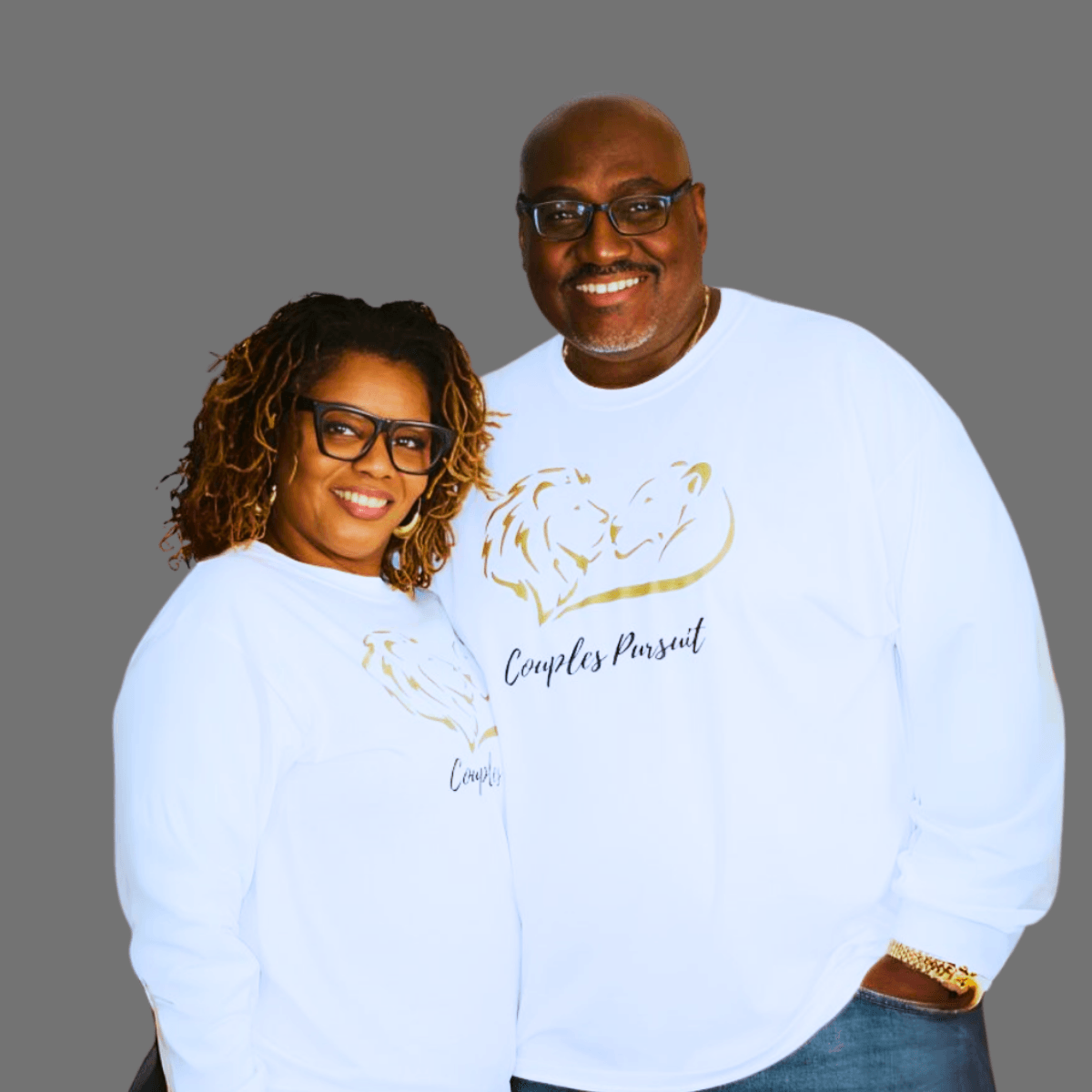
Vincent and Valerie Woodard are the founders of Couples Pursuit. Married since 2000, they specialize in restoring marriages that feel beyond repair using biblical principles. Connect with them at www.couplespursuit.com.
Want more posts like this one?
We send practical, biblical marriage help to your inbox.
No spam. Just honest content for real couples.
Need to Talk?
Are You Tired of Feeling Disconnected From Your Spouse or Future Spouse?
Book Your FREE 15-Minute
Strategy Session Today!
Our Coaching is based on:
The 5 Marriage Mandates™
Method
Many books offer quick fixes or surface-level advice. But “The 5 Marriage Mandates™” dives deep, addressing the real challenges couples face today.

What Is the Root Issue in Your Marriage?
Take the Free 5 Marriage Mandates™ Quiz. No right or wrong answers...
Just honest ones.

Are You Tired of Feeling Disconnected From Your Spouse or Future Spouse?
FREE 15-Minute Strategy Session
Book Your FREE 15-minute Relationship Restoration Roadmap call with Vincent & Valerie TODAY!
*We respect the rights of all individuals. However, our services may not be appropriate if you identify as LGBTQ, have an untreated addiction, are being physically abused, or are currently involved in an extramarital relationship.



Couples Pursuit is a subsidiary of Woodard Worldwide LLC.
@2026 Couples Pursuit | Privacy policy | Legal | Terms & Conditions