What Is the Root Issue in Your Marriage?
What Is the Root Issue in Your Marriage?

Marriage Counseling & Restoration
You Made a Vow. Do You Remember What It Actually Meant?

The Difference Between a Marriage License and a Marriage Covenant
You said the words. Somewhere along the way, they became background noise. This post unpacks what you actually promised on your wedding day, and why remembering it changes how you fight, forgive, and stay.
Simone had the search bar open before she realized what she was doing.
"Grounds for divorce in..." Her thumb hovered over the keyboard. It had been a brutal six months. Renaldo had been distant, short-tempered, gone more than he was home.
She was tired of feeling like a single parent inside a marriage. She was tired of feeling tired.
She did not finish typing. Instead, a strange thought interrupted her, one that had nothing to do with anything happening right now.
What did we actually say? At the altar. What were the exact words?
She could not remember. Not really. She remembered the dress, the flowers, Renaldo crying when he saw her walk in. She remembered the reception, the song they danced to, her father's toast. But the vows themselves, the actual words she had promised in front of God and everyone she loved, had blurred into a vague, generic memory.
Something about better or worse. Something about sickness and health. She had said the words. She was not sure she had ever actually understood them.
She put the phone down and pulled up their wedding video instead.
What she heard, hearing her own voice say those words again for the first time in twelve years, changed the rest of that week completely.
This post is part of our complete guide to Covenant in marriage. Read the full guide here.
A License Is Not a Covenant
Here is a distinction most couples never think about, because nobody ever points it out to them. The piece of paper you filed at the county clerk's office is not the same thing as the covenant you made at the altar.
A marriage license is a legal document. It grants you certain rights and responsibilities recognized by the state, tax status, medical decision-making authority, inheritance, joint property. It is real and it matters practically. But it is administrative. It is paperwork. A government official can process it without ever knowing your names.
The vow is something else entirely. It is not a form you fill out. It is an oath you spoke, out loud, with your own voice, in front of witnesses and before God. Your vows did not create your marriage in some magical, mechanical sense. They declared, publicly and irreversibly, the covenant you were entering. The license makes your marriage legal. The vow is what made it covenant.
Most couples treat these as the same thing, a single event they went through on one day. But one of them can be revised by an attorney. The other was spoken as an oath, and Scripture treats oaths very differently than paperwork.
What a Vow Actually Is
The Bible does not treat vow-making casually, and it is worth understanding why before we look at what you specifically promised.
Numbers 30:2 says: "If a man makes a vow to the Lord, or swears an oath to bind himself by some agreement, he shall not break his word; he shall do according to all that proceeds out of his mouth." (NKJV)
Notice the weight of that language. Not "he should try." Not "he is encouraged to." He shall not break his word. A vow, in the biblical framework, is treated as binding the moment it leaves your mouth.
Ecclesiastes 5:4-5 goes further: "When you make a vow to God, do not delay to fulfill it. He has no pleasure in fools; fulfill your vow. It is better not to make a vow than to make one and not fulfill it." (NKJV)
That is a striking statement. Scripture would rather you never vow at all than vow and treat it lightly. Which means the words spoken at your wedding were never meant to function as a beautiful ceremonial formality. They were meant to function as a binding commitment made before the God who takes vows more seriously than we typically do.
God Was Standing There When You Said It
Here is something that tends to reframe an entire marriage once it actually lands. God was not a decoration at your wedding. He was a witness.
Malachi 2:14 says: "Yet you say, 'For what reason?' Because the Lord has been witness between you and the wife of your youth, with whom you have dealt treacherously; yet she is your companion and your wife by covenant." (NKJV)
This passage was written to husbands who had grown careless with their marriages, and the rebuke is specific. God says He personally witnessed the vow. He was there. He heard the words. And the covenant you made is not simply between you and your spouse. It has a third party who was present at the making of it and remembers exactly what was said.
That is a sobering thought in a hard season. It is also, in its own way, a source of real hope. The same God who witnessed your vow is not a passive bystander now. He is still present, still invested, still able to help you keep what you promised, even in a season where keeping it feels nearly impossible on your own strength.
What You Actually Promised
Most people said their vows once, under emotional pressure, in front of an audience, with adrenaline running high, and never really unpacked what the individual words meant. Let's do that now.
"To have and to hold."
This is not passive. It is not simply acknowledging that you happen to be married. It is an active commitment: I will actively choose you. I will hold onto you, even when holding on is inconvenient, uncomfortable, or costly. It is a promise of ongoing pursuit, not a one-time acquisition.
"For better or for worse."
Most people only really absorb the "better" half on their wedding day, because that is the emotional posture of a wedding. But the vow explicitly names "worse" as part of what you agreed to. Not as a possibility you hoped to avoid. As a condition you promised to stay present for.
"Forsaking all others."
This is a boundary vow, not just a romance vow. It is a promise to place your spouse in a category no one else occupies, emotionally, physically, spiritually. C.S. Lewis made an observation in Mere Christianity worth sitting with: he argued that the deepest wrong in marital unfaithfulness is not primarily the physical act itself, but something closer to perjury, breaking a solemn vow made under oath. That reframe changes how seriously "forsaking all others" is meant to be taken. It is not a suggestion. It is an oath.
"Till death do us part."
This is the vow that defines the outer boundary of the covenant. Not until it gets hard. Not until the feelings fade. Not until something better comes along. Until death. That is an extraordinary thing to promise, and most couples say it in under three seconds without ever letting its actual weight register.
"The license makes your marriage legal. The vow is what made it covenant."
Why This Changes How You Fight, Forgive, and Stay
Here is where this distinction stops being theological trivia and starts changing how a marriage actually functions day to day.
When you understand your marriage as a contract, every disappointment becomes a potential breach. If my spouse is not holding up their end, some part of me feels released from mine. That framework quietly turns every hard season into a referendum on whether the deal is still worth keeping.
When you understand your marriage as a covenant, sealed by a vow you made before God, the hard season does not raise the question of whether to stay. It raises the question of how to work through this together, because the promise was never conditional on the marriage being easy.
This changes how you fight, because you are no longer negotiating from a position of "prove to me this is still worth it." It changes how you forgive, because forgiveness becomes an extension of a promise you already made rather than something you have to be talked into. And it changes how you stay, because staying is not dependent on your spouse earning it back every single day. It is the ongoing fulfillment of an oath you spoke with your own mouth, witnessed by God, that you shall not break.
None of this means staying in a genuinely unsafe or dangerous situation. Covenant does not require enduring abuse, and Scripture does not ask that of anyone. But for the ordinary hardship every marriage eventually faces, the exhaustion, the distance, the disappointment, remembering what you actually vowed reframes the entire question from should I stay to how do we work through this, together, the way we promised we would.
Where to Start This Week
You do not need a renewed ceremony to reconnect with what you promised. You need to actually revisit the words.
Step 1: Find your actual vows and read them out loud, together.
If you wrote your own vows or have a video from your wedding, find them. Read them or watch them together this week, all the way through, without rushing. Notice which lines land differently now than they did on your wedding day.
Ask each other: Which part of our vows do you think we've honored well? Which part have we let slip the most?
Step 2: Unpack one phrase honestly.
Choose one specific line from your vows, "for better or worse," "forsaking all others," "till death do us part," whatever it is, and talk honestly about what it actually requires of you right now, in this current season, not in the abstract.
Ask yourself: If I am honest, have I been treating our marriage more like a contract or more like a covenant lately?
Step 3: Recommit out loud, specifically.
You do not need a formal renewal ceremony. Look at each other and say, in your own words, that you remember what you promised and you are choosing it again, on purpose, today.
Ask each other: What would it look like for us to actually live out what we promised this week, not just remember it?
Not Sure Where to Begin?
Most marriage issues are not the real issue. The fighting, the distance, the unresolved arguments are symptoms. Underneath all of them is one of 5 root causes.
Take the free 5-minute 5 Marriage Mandates Assessment to find out which root needs the most attention in your marriage right now. No right or wrong answers. Just honest ones.
Or book a free 15-minute session at couplespursuit.com/talk and let us help you find it together.
Join a community of couples choosing to pursue each other at facebook.com/groups/couplespursuit.
Free Resources
These posts go deeper on the covenant themes covered here.
Covenant Marriage Guide - The complete guide to what covenant actually means and why the words you spoke at your wedding still matter today.
What Happened to the Marriage You Promised God? - What happens when God quietly gets crowded out of the center of a marriage, and how to bring Him back.
The 10 Agreements: Biblical Foundations to Help Any Marriage - Ten practical agreements every couple should discuss and revisit, building on the covenant your vows established.
My Husband Wants a Divorce. Here's Why I'm Not Giving Up. - What it looks like to hold onto covenant when your spouse is ready to walk away.
When You're Married But Not Really All In - What half-commitment looks like and why remembering your vow is often the first step back to full presence.
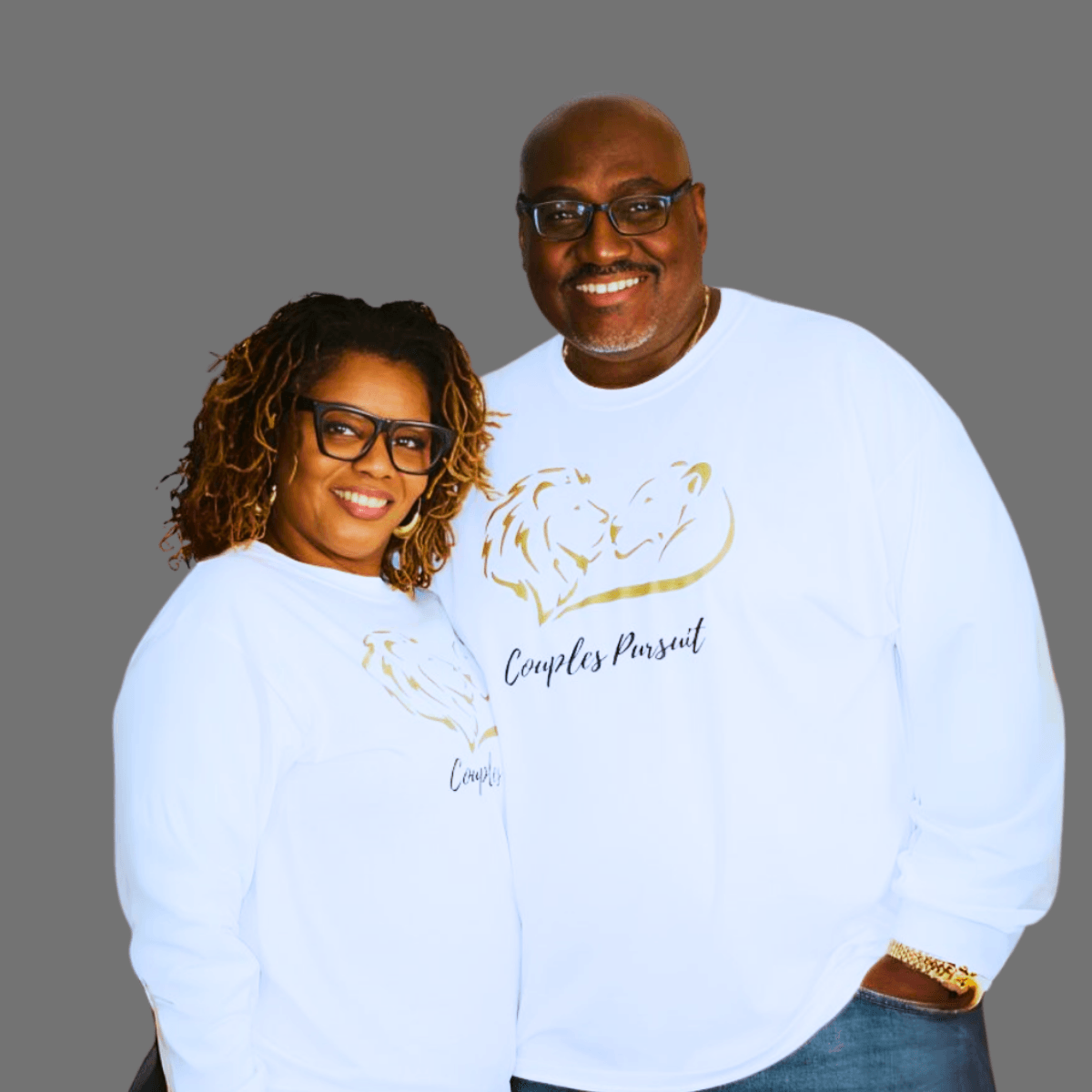
Vincent and Valerie Woodard are the founders of Couples Pursuit. Married since 2000, they specialize in restoring marriages that feel beyond repair using biblical principles. Connect with them at www.couplespursuit.com.
Want more posts like this one?
We send practical, biblical marriage help to your inbox.
No spam. Just honest content for real couples.
Need to Talk?
Are You Tired of Feeling Disconnected From Your Spouse or Future Spouse?
Book Your FREE 15-Minute
Strategy Session Today!
Our Coaching is based on:
The 5 Marriage Mandates™
Method
Many books offer quick fixes or surface-level advice. But “The 5 Marriage Mandates™” dives deep, addressing the real challenges couples face today.

What Is the Root Issue in Your Marriage?
Take the Free 5 Marriage Mandates™ Quiz. No right or wrong answers...
Just honest ones.

Are You Tired of Feeling Disconnected From Your Spouse or Future Spouse?

FREE 15-Minute Strategy Session
Book Your FREE 15-minute Relationship Restoration Roadmap call with Vincent & Valerie TODAY!
*We respect the rights of all individuals. However, our services may not be appropriate if you identify as LGBTQ, have an untreated addiction, are being physically abused, or are currently involved in an extramarital relationship.




Couples Pursuit is a subsidiary of Woodard Worldwide LLC.
@2026 Couples Pursuit | Privacy policy | Legal | Terms & Conditions