What Is the Root Issue in Your Marriage?
What Is the Root Issue in Your Marriage?

Marriage Counseling & Restoration
Is Your Spouse a Narcissist or Just Acting Like One?

Question: "How do you deal with being married to a narcissist who intentionally hurts you because they know you have to forgive them?"
Rachel could have written those exact words. For three years, she'd been telling friends, family, and anyone who would listen that her husband Jason was a narcissist.
Every argument ended the same way. Jason would say something hurtful, Rachel would get upset, and Jason would eventually apologize with "I'm sorry. I know you'll forgive me because that's what Christians do."
Then he'd do it again. And again. And again.
The cycle was exhausting. And the label... the label made Rachel feel both vindicated and hopeless. Vindicated because it explained his behavior. Hopeless because if he was truly a narcissist, wasn't that just who he was? Could narcissists even change?
But everything shifted when Rachel and Jason came to counseling. After listening to their story, hearing their patterns, and observing their interactions, I asked Rachel a question that changed everything:
"Has Jason been diagnosed with Narcissistic Personality Disorder by a mental health professional?"
She paused. "No... but he acts like one. He's selfish, he always has to be right, he doesn't seem to care how his words affect me..."
"Those are narcissistic behaviors," I said gently. "And they're very real and very painful. But there's a critical difference between exhibiting narcissistic behaviors and having Narcissistic Personality Disorder. And that difference matters more than you might think."
If you've ever wondered whether your spouse is a narcissist, or if you've been told you're married to one, this post is for you. Because understanding the difference between narcissistic behavior and clinical narcissism isn't just semantics. It's the difference between hope and hopelessness. Between strategy and surrender. Between enabling and healthy boundaries.
The Difference Between Narcissistic Behavior and NPD
Let's get clear on something right from the start: Clinical narcissism, officially called Narcissistic Personality Disorder, is a formal mental health diagnosis. And only a qualified mental health professional can make that diagnosis.
NPD isn't just someone being selfish or self-centered. It's a pervasive, lifelong pattern that shows up across every area of someone's life. Work, family, friendships, church, everywhere. It involves:
A grandiose sense of self-importance
A need for excessive admiration
A sense of entitlement
Lack of empathy that's consistent across all relationships
Exploiting others to achieve their own ends
Envy of others or belief that others are envious of them
Arrogant, haughty behaviors or attitudes
And here's the key: these patterns are rigid, pervasive, and present from early adulthood across nearly all situations. Someone with true NPD doesn't just act this way with you. They act this way with everyone, consistently, over their entire adult life.
True NPD is actually quite rare. Estimates run around 1 to 5 percent of the general population. Which means the vast majority of people being called narcissists in marriages don't actually have the clinical disorder.
What they have are narcissistic behaviors.
And that's a completely different thing.
Narcissistic behaviors are patterns of selfishness, self-centeredness, and lack of empathy that anyone can exhibit. Especially under stress, during certain seasons of life, or when operating in pride and sin. We've all been narcissistic at times. Thinking it's all about us. Demanding our way. Lacking empathy in the moment.
The difference? Narcissistic behaviors can change. True NPD, according to most clinical research, is notoriously difficult to treat because people with NPD rarely recognize they have a problem.
So why does this distinction matter?
Because if your spouse is exhibiting narcissistic behaviors (which is what most people are actually dealing with), there's hope for change. There are strategies that work. There are biblical principles that can transform the pattern. The situation isn't hopeless... it's just hard.
But if you label your spouse a clinical narcissist without a proper diagnosis, you've essentially declared the situation unchangeable. You've given yourself permission to stop trying. And you've given your spouse a convenient excuse: "I can't help it. I'm a narcissist."
Why Calling Your Spouse a Narcissist Is Dangerous
I get it. When you're dealing with painful, selfish, hurtful behavior, having a label feels validating. It explains the chaos. It gives you something to Google. It helps you feel less crazy.
But calling your spouse a narcissist (without a clinical diagnosis) creates more problems than it solves.
First, it's inaccurate. And when we're inaccurate in our assessment of the problem, we end up using the wrong solutions. It's like treating a cold with antibiotics. The treatment doesn't match the actual issue.
Second, it removes responsibility. If your spouse is "a narcissist," then their behavior is just who they are. They can't help it. They'll never change. This removes both their responsibility to change and your responsibility to set proper boundaries.
Third, it creates a fixed mindset instead of a growth mindset. When you label someone, you stop seeing their potential for transformation. You see everything they do through the lens of that label. And ironically, that can actually reinforce the very behaviors you're trying to stop.
Fourth, it weaponizes the label in arguments. "Well, you're a narcissist, so of course you'd say that." This shuts down any possibility of real conversation or resolution.
Finally, and most importantly, it contradicts biblical truth. The Bible says people can change. That the Holy Spirit transforms. That God can soften the hardest hearts. When we declare someone unchangeable, we're limiting what God can do.
This doesn't mean you ignore or minimize the behavior. Narcissistic behaviors are real and painful and need to be addressed. But you address them as behaviors that need to change, not as an unchangeable identity.
For more on how forgiveness works when behaviors keep repeating, read our article on why forgiveness isn't enough to heal your marriage.
What God Says About Selfishness and Change
The Bible has a lot to say about selfish, self-centered behavior. And none of it includes the excuse "I can't help it because that's just who I am."
Philippians 2:3-4 is clear: "Do nothing out of selfish ambition or vain conceit. Rather, in humility value others above yourselves, not looking to your own interests but each of you to the interests of the others."
That's the opposite of narcissistic behavior. And notice, it's a command, not a suggestion. Which means God believes we're capable of choosing humility over selfishness.
James 3:14-16 addresses the heart behind narcissistic behavior: "But if you harbor bitter envy and selfish ambition in your hearts, do not boast about it or deny the truth. Such wisdom does not come down from heaven but is earthly, unspiritual, demonic. For where you have envy and selfish ambition, there you find disorder and every evil practice."
Strong words. But notice: James is talking about something people harbor in their hearts, something they can choose to let go of. It's sin, not an unchangeable personality disorder.
Romans 12:3 warns: "Do not think of yourself more highly than you ought, but rather think of yourself with sober judgment."
Pride and grandiosity aren't personality traits we're stuck with. They're attitudes we can change through the power of the Holy Spirit.
And here's the hope: 2 Corinthians 5:17 promises that "if anyone is in Christ, the new creation has come: The old has gone, the new is here!"
God is in the business of transformation. Even the most selfish, self-centered person can be changed by the power of God.
This doesn't mean change is easy or automatic. It doesn't mean your spouse will change just because you pray about it. But it does mean that change is possible when someone is willing to submit to God's work in their life.
The question isn't "Is my spouse capable of change?" The question is "Is my spouse willing to change?"
The Forgiveness Manipulation You're Describing
Now let's address the specific situation from that social media comment: "How do you deal with being married to someone who intentionally hurts you because they know you have to forgive them?"
This isn't just narcissistic behavior. This is spiritual abuse. This is weaponizing biblical truth to continue sinful behavior. And it needs to be called what it is.
Here's what this pattern looks like:
Your spouse does something hurtful.
You get upset and try to address it.
They eventually apologize (maybe sincerely, maybe not).
They remind you that Christians are supposed to forgive.
You forgive because that's what you're supposed to do.
They do the same thing again.
When you bring it up, they say "I thought you forgave me" or "You're still bringing that up? I thought we moved past this."
The cycle repeats.
Let's be absolutely clear: this is not how biblical forgiveness works. And enabling this pattern is not what God calls you to do.
Biblical forgiveness means releasing your right to revenge and trusting God with justice. It means not holding the offense over your spouse's head. It means choosing not to become bitter.
But biblical forgiveness does not mean:
Pretending the behavior didn't happen
Accepting continued mistreatment
Removing all consequences
Trusting someone who hasn't proven trustworthy
Allowing yourself to be hurt repeatedly without protection
Never addressing patterns that need to change
In fact, true forgiveness often requires confrontation. Matthew 18:15 is clear: "If your brother or sister sins, go and point out their fault, just between the two of you."
Notice: go and point out their fault. Not "just forgive and move on." Not "don't make waves." Point it out. Address it. Deal with it.
Luke 17:3 adds an important detail: "If your brother or sister sins against you, rebuke them; and if they repent, forgive them."
See that word "repent"? Real forgiveness in relationships involves repentance. Not just "I'm sorry," but actual turning away from the behavior. Without repentance, you're being asked to enable sin, not practice forgiveness.
If your spouse is using your commitment to forgiveness as permission to keep hurting you, that's manipulation. And you need to address it directly.
Our article on biblical marriage boundaries provides detailed guidance on how to set limits that honor God while protecting yourself from repeated harm.
How to Deal with Narcissistic Behavior in Your Spouse
So if your spouse is exhibiting narcissistic behaviors (not clinical NPD, just selfish, self-centered patterns), how do you actually deal with it? Here's a biblical framework:
Step 1: Stop using the label. Instead of "You're a narcissist," address specific behaviors: "When you dismiss my feelings, it hurts me and damages our connection." This keeps the focus on changeable behaviors instead of fixed identity.
Step 2: Set clear boundaries. Boundaries aren't about controlling your spouse. They're about defining what you will and won't accept. "I will not continue conversations where I'm being yelled at. If you raise your voice, I'll need to take a break." Then follow through consistently.
Step 3: Stop enabling the behavior. If you keep accepting the apology without seeing any change, you're teaching your spouse that apologies are magic words that erase consequences. Instead, require actual repentance (changed behavior) before fully restoring trust.
Step 4: Document patterns. When someone exhibits narcissistic behavior, they often deny or minimize it later. Keep a journal of specific incidents: what happened, when, what was said. This isn't to use as ammunition, but to help you see patterns clearly and to reference when discussing issues.
Step 5: Require counseling as a condition of continuing. If the patterns are serious and damaging, make professional help non-negotiable. "I love you and I'm committed to this marriage, but these patterns are destroying us. I need you to work with a counselor on these issues."
Step 6: Protect yourself emotionally and spiritually. Make sure you have support from trusted friends, a counselor, or a support group. Don't let your spouse be your only source of emotional connection. Guard your heart while still being open to reconciliation.
Step 7: Pray for transformation, not just behavior modification. The goal isn't just to get your spouse to act better. It's for God to transform their heart. Pray specifically for humility, empathy, and genuine repentance.
If you're dealing with a spouse who shuts down when you try to address these issues, our post on communication breakthroughs offers additional strategies.
When Professional Help Is Necessary
Some situations require more than just better communication and boundaries. You need professional help if:
The behavior is escalating. If your spouse's narcissistic behaviors are getting worse over time, not better, you need a trained professional to help assess what's happening.
There's any abuse. Physical, sexual, emotional, spiritual, or financial abuse is not something you handle on your own. Get help immediately. Abuse is not a marriage problem to fix... it's a safety issue that requires intervention.
Your mental health is suffering significantly. If you're experiencing anxiety, depression, panic attacks, or other mental health symptoms because of your spouse's behavior, you need support from a licensed therapist.
Nothing is changing despite your efforts. If you've tried boundaries, direct communication, prayer, and nothing is improving, it's time for professional intervention.
You suspect actual NPD. If you genuinely believe your spouse might have clinical Narcissistic Personality Disorder, they need to be evaluated by a qualified mental health professional. Don't diagnose this yourself.
Your spouse uses your faith against you. If they weaponize Bible verses, manipulate you with spiritual language, or use your commitment to marriage as permission to keep hurting you, you need a trained counselor who understands spiritual abuse.
Here's what you need to understand: seeking professional help isn't giving up on your marriage. It's fighting for your marriage with better tools and trained support.
And if your spouse refuses to get help, you can still go yourself. A good counselor can help you develop strategies for managing the behavior, establish clear boundaries, and assess whether the situation is safe to continue.
The Story of Jason and Rachel's Transformation
Remember Jason and Rachel from the beginning? Once Rachel stopped using the label "narcissist" and started addressing specific behaviors, everything changed.
Instead of "You're a narcissist who only cares about yourself," she started saying: "When you make decisions that affect both of us without asking my input, I feel disrespected and unimportant. I need us to make major decisions together."
Specific. Focused. Changeable.
And instead of accepting Jason's "I'm sorry, you have to forgive me" and moving on, Rachel set a boundary: "I appreciate your apology. And I forgive you for this specific incident. But if this pattern continues, we need to get professional help. I can't keep having the same conversation every month."
Then she followed through. When Jason dismissed her feelings two weeks later, she said calmly: "This is the pattern I mentioned. I'm making an appointment with a counselor. I'd like you to come with me, but I'm going either way."
Jason was defensive at first. But eventually, he agreed to go.
In counseling, Jason discovered that his behavior wasn't just "who he was." It was a pattern he'd learned from his father, reinforced by years of getting his way through intimidation and dismissiveness. It was sin he could repent of. It was behavior he could change.
Was it easy? No. Did it happen overnight? Absolutely not. Did Jason occasionally slip back into old patterns? Yes.
But here's the difference: he was now aware of the patterns. He was working to change them. And Rachel had clear boundaries about what she would and wouldn't accept.
Three years later, their marriage looks completely different. Not because Jason stopped being human. Not because Rachel stopped having needs. But because they dealt with narcissistic behaviors as behaviors that could change, not as an unchangeable personality disorder.
If you're feeling like strangers in your own marriage because of these patterns, this article can help you understand how to rebuild connection.
The Hope You Need to Hear
If you're dealing with narcissistic behavior in your spouse, I know how exhausting it is. I know how hopeless it can feel. I know how tempting it is to just label them a narcissist and give up.
But here's what you need to hear: narcissistic behaviors can change. People can grow. Hearts can soften. Marriages can heal.
Not always. Not easily. Not without hard work, clear boundaries, and often professional help. But it's possible.
The God who transformed Saul the persecutor into Paul the apostle can transform your selfish spouse. The Holy Spirit who convicted Peter of his denial can convict your spouse of their self-centeredness. The grace that saved you can save your spouse from patterns of pride and selfishness.
But you have to stop enabling. You have to set boundaries. You have to stop accepting apologies without repentance. You have to require change, not just promise of change.
You also have to recognize when you're dealing with true clinical NPD that requires specialized professional intervention. And you have to be willing to accept that you can't change your spouse. Only God can do that. And your spouse has to be willing.
What you can change is how you respond. What boundaries you set. What behavior you'll accept. Whether you'll keep enabling the pattern or start requiring real transformation.
Forgiveness doesn't mean being a doormat. Grace doesn't mean accepting abuse. Staying married doesn't mean accepting mistreatment.
You can love your spouse, commit to your marriage, forgive repeatedly, and still say: "This behavior needs to change. And if it doesn't, there will be consequences."
That's not being unforgiving. That's being wise. That's honoring God by honoring the person He created you to be.
Your spouse might be acting like a narcissist. But they don't have to stay that way. And you don't have to keep accepting it.
Change is possible. Healing is available. Hope is real.
But it starts with calling behaviors what they are, setting boundaries that protect you, and requiring real repentance instead of just apologetic words.
God can transform your marriage. But He's not going to do it while you enable the very behavior that's destroying it.
It's time to love your spouse enough to stop accepting the narcissistic behavior. To require change. To set boundaries. To get help.
Your marriage is worth fighting for. But fighting for your marriage doesn't mean accepting treatment that dishonors the person God created you to be.
Related Resources:
Take the 5 Marriage Mandates Quiz to identify which areas need the most attention in your marriage
Download our free guide on biblical boundaries to learn how to protect yourself while honoring your marriage
Read about how one person can turn a marriage around even when only one spouse is willing to change
Explore healthy communication strategies for difficult conversations
Need personalized help with narcissistic behaviors in your marriage?
Visit our coaching page to learn how we can help you set boundaries, require change, and rebuild your marriage on healthier foundations.
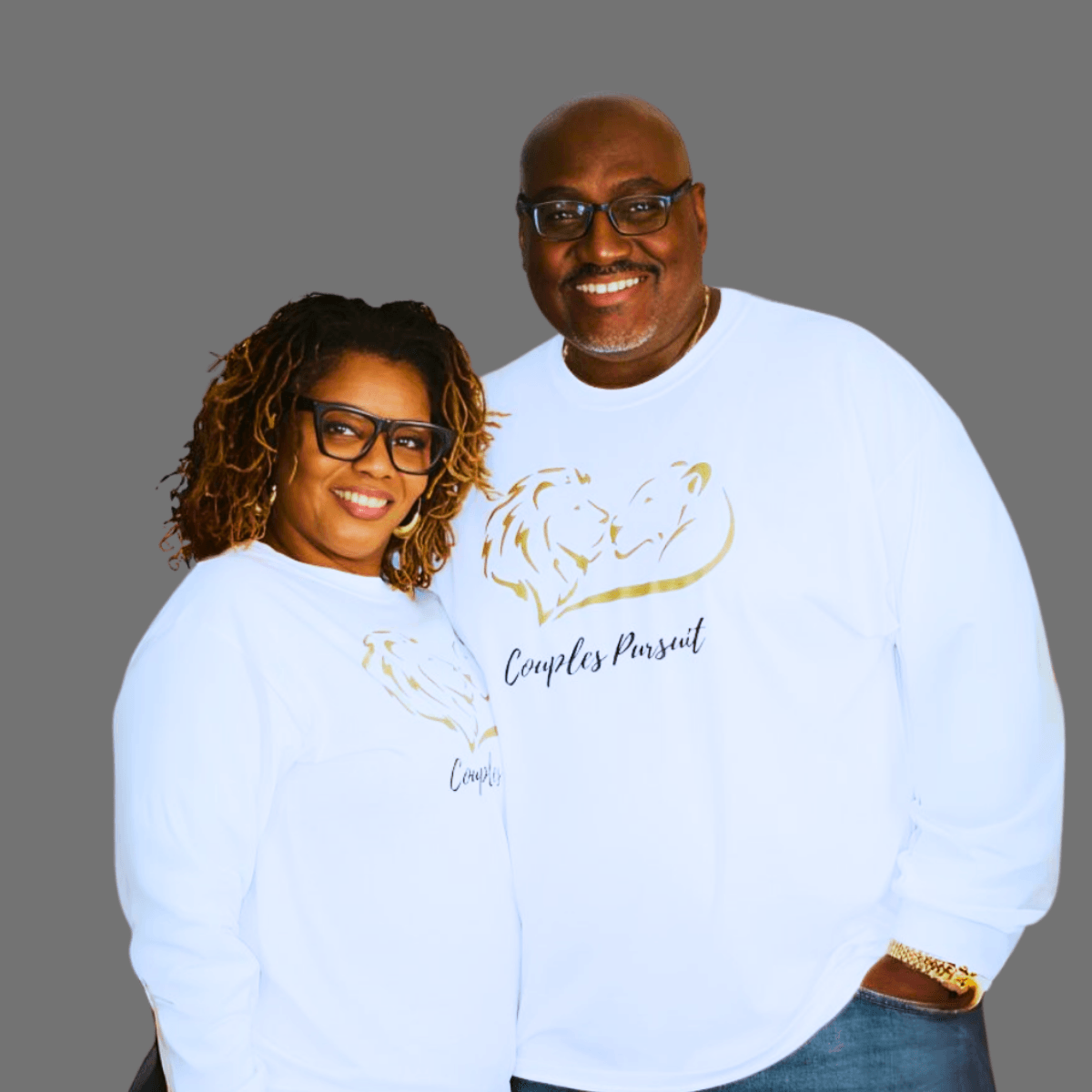
Vincent and Valerie Woodard are the founders of Couples Pursuit. Married since 2000, they specialize in restoring marriages that feel beyond repair using biblical principles. Connect with them at www.couplespursuit.com.
Want more posts like this one?
We send practical, biblical marriage help to your inbox.
No spam. Just honest content for real couples.
Need to Talk?
Are You Tired of Feeling Disconnected From Your Spouse or Future Spouse?
Book Your FREE 15-Minute
Strategy Session Today!
Our Coaching is based on:
The 5 Marriage Mandates™
Method
Many books offer quick fixes or surface-level advice. But “The 5 Marriage Mandates™” dives deep, addressing the real challenges couples face today.

What Is the Root Issue in Your Marriage?
Take the Free 5 Marriage Mandates™ Quiz. No right or wrong answers...
Just honest ones.

Are You Tired of Feeling Disconnected From Your Spouse or Future Spouse?

FREE 15-Minute Strategy Session
Book Your FREE 15-minute Relationship Restoration Roadmap call with Vincent & Valerie TODAY!
*We respect the rights of all individuals. However, our services may not be appropriate if you identify as LGBTQ, have an untreated addiction, are being physically abused, or are currently involved in an extramarital relationship.




Couples Pursuit is a subsidiary of Woodard Worldwide LLC.
@2026 Couples Pursuit | Privacy policy | Legal | Terms & Conditions