What Is the Root Issue in Your Marriage?
What Is the Root Issue in Your Marriage?

Marriage Counseling & Restoration
Four Seconds To STOP Before You Say Something You'll Regret

The STOP Method: How to Find the Gap Between What Triggers You and What You Do Next
Your reaction didn't start with your mouth. It started somewhere else, and you probably missed it. The STOP Method shows you exactly where, and gives you a real tool to find the gap before you say something you can't take back.
Priscilla did not mean to raise her voice.
Her husband Emmanuel had walked in forty minutes late, again, and said "sorry, work ran long" the same way he always said it, distracted, already halfway to the fridge.
Something in her just went off. She heard herself saying things she had not planned to say. Things about how he never respected her time, how he did this every week, how she was tired of being an afterthought.
Emmanuel got defensive fast. The conversation went exactly where it always went. Loud, circular, nowhere.
Twenty minutes later, sitting on opposite ends of the couch, Priscilla replayed it in her head. He had said one sentence. One ordinary, forty-times-repeated sentence. And somehow it had detonated something in her that took twenty minutes to defuse.
"I don't even know how it escalated that fast," she told us later. "One second I was fine. The next second I was yelling."
That is the most common sentence we hear in this kind of session. And it points to something almost every couple misses: the reaction did not actually happen in one second. It happened in a sequence. It just moved too fast for Priscilla to notice the sequence while it was happening.
That sequence is exactly what the STOP Method is built to slow down.
This post is part of our complete guide to Communication in marriage. Read the full guide here.
Why Your Reaction Started Before You Knew It
Here is something worth sitting with. Your reaction in a conflict does not start with your mouth. It starts somewhere earlier, and most people never notice it happening, because it moves fast and feels automatic.
Something happens. Your body responds before your mind catches up, a tightening in your chest, a flush of heat, your jaw setting without you deciding it should. Then a thought forms, often faster than you can name it. And only after all of that does something come out of your mouth.
Most couples experience this whole chain as one instant event. He said something, I got mad, I said something back. But there is actually a sequence hiding inside that instant, and the sequence matters, because somewhere inside it is a moment where things could have gone differently.
The STOP Method exists to help you find that moment. Once you can see it, you have something you did not have before: a choice.
"She felt like a supporting character in her own marriage."
S: Stop
The first step is simple to say and hard to do. Before a single word leaves your mouth, stop.
Not walk away. Not shut down. Just pause the forward motion for a beat before you respond. This is the step that creates room for everything else to happen. Without it, your body and your old patterns will answer for you before your mind ever gets a vote.
James 1:19 says: "So then, my beloved brethren, let every man be swift to hear, slow to speak, slow to wrath." (NKJV) That order matters. Swift to hear. Slow to speak. The Stop step is simply the practice of actually living that order instead of reversing it under pressure.
T: Think
Use that pause to reflect, even briefly. What actually triggered this? What am I trying to communicate right now? What outcome am I actually hoping for from this conversation?
Most couples skip this step entirely. They move straight from feeling something to saying something, with nothing in between. That is usually where the real damage starts, not in the disagreement itself, but in the words chosen without a single second of reflection behind them.
Thinking, in this context, is not about winning the argument in your head before you have it out loud. It is about getting honest with yourself about what you actually want to happen next, before your mouth decides for you.
O: Observe (The Step Almost Everyone Skips)
This is where most people think they already know what to do. Notice you are angry, take a breath, move on. But that is too surface-level to actually change anything. Real observation means tracing back through what happened inside you, in sequence, before you ever responded.
Try this the next time you catch yourself mid-conflict, or even afterward while reviewing what happened. Walk it back through four points.
Trigger. What actually happened? What did your spouse say or do that set things in motion? Be specific. "They interrupted me." "They forgot." "Their tone changed." Name the actual moment, not the general feeling.
Body. What did you feel physically before you said anything at all? Your shoulders got tight. Your chest got heavy. Your heart rate picked up. Something shifted in your body, and it happened fast. That physical signal was your first warning, and most of us miss it completely because we are focused on the words instead of what is happening underneath them.
Thought. What did your mind actually tell you in that moment? Not what you said out loud. What you told yourself, privately, in the half second before you responded. "They don't respect me." "Here we go again." "They never listen." That thought is the bridge between what happened and how you responded. It is doing more work than most people realize.
Response. What did you actually do? Raised your voice. Shut down. Said something you wished you could take back the moment it left your mouth. Walked out of the room.
Now look at that whole sequence from beginning to end. Somewhere between the Trigger and the Response, there was a moment where things could have gone differently. That moment is what we call your pause point.
For Priscilla, her pause point was not when she started raising her voice. It was earlier, right when her chest tightened and the thought "he does this every week, he doesn't care" formed in her mind. That was the moment STOP was supposed to kick in. She just did not know to look for it there yet.
Before you move to Proceed, it helps to write down one sentence you will actually use next time you feel yourself at that pause point. Something real, something you could genuinely say to yourself or to your spouse that interrupts the pattern before it gathers momentum. It might sound like:
"Let me slow down before I answer."
"Help me understand what you meant."
"I'm feeling something right now. Can we take five minutes?"
"I want to respond well. Give me a second."
The goal here is not to avoid conflict entirely. It is to create a gap between what triggers you and what you do next. That gap is where your choice actually lives.
P: Proceed
After you have observed and identified your pause point, decide how to move forward. That might mean continuing the conversation calmly. It might mean taking a short break with a committed time to come back. It might mean simply changing your approach mid-conversation once you notice what is actually happening inside you.
The difference is that now you are proceeding with awareness instead of pure reaction. That is the entire point of the four steps. Not perfection. Not the elimination of hard feelings. Just a gap, however brief, between the trigger and the response, where a real choice becomes possible.
This Isn't About Avoiding Conflict
It is worth saying plainly: STOP is not a tool for suppressing disagreement or pretending everything is fine. Healthy marriages still argue. The goal is not a conflict-free marriage. It is a marriage where conflict does not routinely spiral past the point either person actually meant to go.
Recent research on couples in conflict found that even a brief, several-second pause before responding measurably reduced escalation and aggression between partners. That finding lines up with something we have watched happen in session after session. The pause is not weakness. It is often the single most powerful move available in a heated moment.
Proverbs 15:1 says: "A soft answer turns away wrath, but a harsh word stirs up anger." (NKJV) The STOP Method is simply a structured way of getting yourself to the soft answer instead of the harsh one, by giving you an actual process to follow in the moment your body wants to skip straight to reaction.
This connects directly to the Semáforo Model we teach, which helps you identify what emotional light you are at before a conversation even starts. Where Semáforo asks "am I ready to have this conversation," STOP is the tool for the moment you are already in one and feel it starting to go sideways. Read the full Semáforo teaching here.
STOP also has a second use that matters just as much. It is what you walk through right before you initiate the hard conversation, the one some couples call "the Talk," the one that actually requires sitting down on purpose to work through something real.
Running through Stop, Think, and Observe before you even open your mouth means you walk into that conversation already regulated, instead of carrying an unexamined trigger response into a moment that was supposed to be intentional.
That is where the ODD Conversations framework picks up. STOP gets you into the room calm enough to actually talk without being offensive, listen without being defensive, and leave your spouse with their dignity. Read the full ODD Conversations framework here.
Where to Start This Week
You do not need a calm, low-stakes moment to learn this. You need your next real conflict, used as practice instead of just something to survive.
Step 1: Walk back your last conflict using the four points.
Pick a recent disagreement, even a small one, and walk it back through Trigger, Body, Thought, and Response. Write it down if that helps make it concrete. This is where you will likely find your personal pause point for the first time.
Ask yourself: Looking back, where in that sequence was the moment things could have gone differently?
Step 2: Write your one sentence.
Choose a real, specific sentence you will use the next time you feel yourself at your pause point. Not a general intention. An actual line you could say out loud to your spouse or to yourself in the moment.
Ask yourself: What is one sentence I could genuinely say, in my own voice, that would interrupt my pattern before it gains momentum?
Step 3: Try it once, on purpose, this week.
The next time you feel that early physical signal, the tight chest, the heat, the tension, use it as your cue. Say your sentence. Take the pause. Then proceed with whatever you decide, rather than whatever your body decides for you.
Ask your spouse: Can we agree on a signal or a phrase either of us can use when we need a moment before responding?
Not Sure Where to Begin?
Most marriage issues are not the real issue. The fighting, the distance, the unresolved arguments are symptoms. Underneath all of them is one of 5 root causes.
Take the free 5-minute 5 Marriage Mandates Assessment to find out which root needs the most attention in your marriage right now. No right or wrong answers. Just honest ones.
Or book a free 15-minute session at couplespursuit.com/talk and let us help you find it together.
Join a community of couples choosing to pursue each other at facebook.com/groups/couplespursuit.
The names and personal details in the stories throughout this post have been changed to protect the privacy of the individuals involved. Any resemblance to specific persons is coincidental.
Free Resources
These posts go deeper on the communication tools and frameworks covered here.
Communication in Marriage - The complete guide to the Communication Mandate and what it takes to build real understanding between two people.
Why Couples Still Can't Communicate - How the STOP Method fits alongside the Semáforo Model and the three types of essential communication in a full picture of what breaks down and why.
Emotions Are Indicators, Not Instructions - The Semáforo Model: how to know which light you are at before a hard conversation even starts.
The ODD Conversations Framework That Stops Marriage Fights - The three rules that keep a conversation safe once you have found your pause point and decided to proceed.
You Know You Feel Something. But Can You Name It? - A vocabulary for naming what is actually happening underneath the Body and Thought steps of your own pattern.
How to Fight Fair - What healthy conflict looks like once you have the tools to stay in the gap instead of reacting past it.
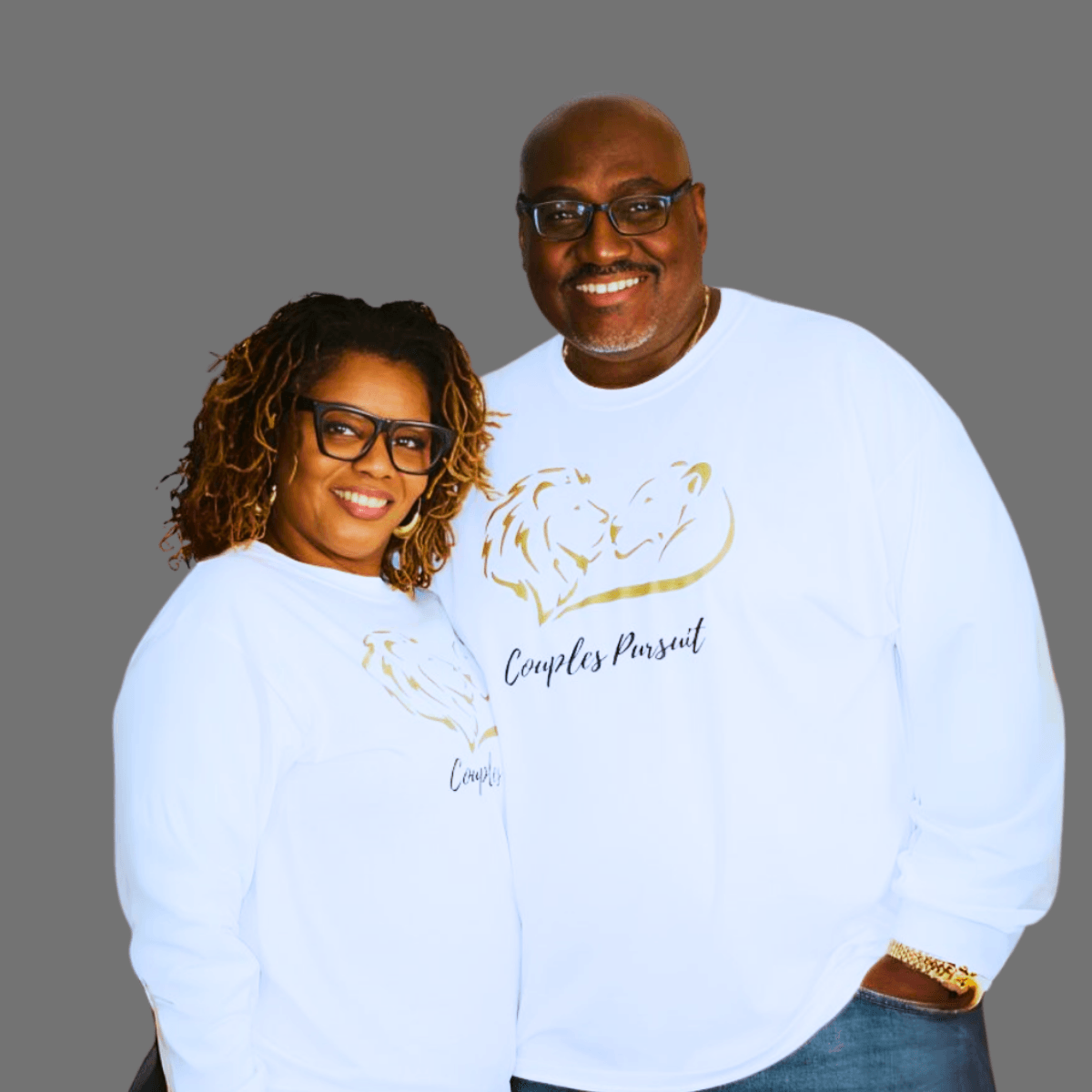
Vincent and Valerie Woodard are the founders of Couples Pursuit. Married since 2000, they specialize in restoring marriages that feel beyond repair using biblical principles. Connect with them at www.couplespursuit.com.
Want more posts like this one?
We send practical, biblical marriage help to your inbox.
No spam. Just honest content for real couples.
Need to Talk?
Are You Tired of Feeling Disconnected From Your Spouse or Future Spouse?
Book Your FREE 15-Minute
Strategy Session Today!
Our Coaching is based on:
The 5 Marriage Mandates™
Method
Many books offer quick fixes or surface-level advice. But “The 5 Marriage Mandates™” dives deep, addressing the real challenges couples face today.

What Is the Root Issue in Your Marriage?
Take the Free 5 Marriage Mandates™ Quiz. No right or wrong answers...
Just honest ones.

Are You Tired of Feeling Disconnected From Your Spouse or Future Spouse?

FREE 15-Minute Strategy Session
Book Your FREE 15-minute Relationship Restoration Roadmap call with Vincent & Valerie TODAY!
*We respect the rights of all individuals. However, our services may not be appropriate if you identify as LGBTQ, have an untreated addiction, are being physically abused, or are currently involved in an extramarital relationship.




Couples Pursuit is a subsidiary of Woodard Worldwide LLC.
@2026 Couples Pursuit | Privacy policy | Legal | Terms & Conditions