What Is the Root Issue in Your Marriage?
What Is the Root Issue in Your Marriage?

Marriage Counseling & Restoration
The Four Words That End Every Marriage Fight

Moving from being right to being heard
The argument had been going in circles for twenty minutes.
"You never listen to me!" Sarah shouted, her voice cracking with frustration.
"That's not true!" Mike fired back.
"I do listen. You just don't like my answers."
"See? You're doing it right now!
You're not hearing what I'm actually saying!"
"I heard every word. You said I don't listen. I'm telling you that's wrong."
And there it was—the moment every marriage fight reaches.
The point where both people are so busy defending themselves, proving their point, and being right that neither person is actually listening anymore.
They weren't fighting about the dishes or the schedule or whatever had started this mess.
They were fighting about who was right and who was wrong.
And as long as that was the battlefield, nobody was going to win.
Then Mike remembered something he'd heard from a marriage counselor months earlier.
This post is part of our complete guide to communication in marriage. Read the full guide here.
Four simple words that could change everything.
He took a deep breath, looked at his wife—really looked at her—and said:
"Help me understand you."
The change was immediate.
Sarah's shoulders dropped.
Her defensive posture softened.
The fire in her eyes shifted from anger to something else entirely: hope.
"What?" she whispered.
"Help me understand you," he said again.
"I can see that you're really hurt, and I don't want you to be hurt.
Help me understand what's really going on."
For the first time in twenty minutes, Sarah felt heard.
Not right.
Not validated in her position.
Heard.
And that, it turns out, made all the difference.
The Disease That's Killing Marriage Communication
Here's what happens in most marriage fights: both people become so focused on being right that nobody focuses on being heard.
You're not really listening to your spouse—you're listening for flaws in their argument.
You're not seeking to understand their heart—you're building your defense.
You're not trying to solve the problem—you're trying to win the war.
And marriage fights aren't wars to be won.
They're puzzles to be solved together.
But our pride, our hurt, and our need to be right turn every disagreement into a courtroom where we're both the prosecutor, judge, and jury.
We present evidence.
We cross-examine.
We deliver closing arguments.
The problem? In a marriage, if somebody has to lose, everybody loses.
When you make your spouse the enemy you have to defeat, you've already defeated your marriage.
What Your Fights Are Really About
Most marriage fights aren't really about the thing you're fighting about.
You think you're fighting about money, but you're actually fighting about feeling valued.
You think you're fighting about chores, but you're actually fighting about feeling appreciated.
You think you're fighting about schedules, but you're actually fighting about feeling prioritized.
You think you're fighting about decisions, but you're actually fighting about feeling respected.
The surface issue is rarely the real issue. And being right about the surface issue never solves the real issue.
That's why you can win an argument and still feel like you lost something important.
That's why your spouse can agree with you and still seem upset. That's why resolving the logistics doesn't resolve the tension.
Your spouse doesn't just need you to be right. They need you to understand them.
The Four Words That Change Everything
"Help me understand you."
Four simple words. But when you say them—and mean them—everything shifts.
Instead of being adversaries, you become teammates.
Instead of defending positions, you explore perspectives.
Instead of proving points, you discover hearts.
Instead of winning arguments, you strengthen relationships.
Here's why these four words are so powerful:
They shift the focus from you to your spouse. Instead of defending your position, you're genuinely curious about theirs.
They acknowledge that you don't have all the information. You're admitting that there might be something you're missing, something you don't understand yet.
They create safety for vulnerability. When someone asks to understand you—really understand you—it feels safe to share what's actually going on in your heart.
They turn conflict into connection. Instead of building walls, you're building bridges.
They honor your spouse's inner world. You're communicating that their thoughts, feelings, and experiences matter to you.
When We Learned This the Hard Way
Valerie and I had to learn this lesson during one of our worst seasons.
I (Vincent) had developed a pattern of shutting down during conflicts, walking away when things got heated.
In my mind, I was avoiding unnecessary drama.
In Valerie's mind, I was abandoning her when she needed me most.
We'd go round and round about this.
I'd explain why walking away was better than saying something I'd regret.
She'd explain why my leaving made her feel rejected and unheard.
Both of us were right.
And both of us were completely missing each other.
The breakthrough came during a counseling session when our counselor asked me a simple question:
"Vincent, instead of defending why you walk away, what if you tried to understand why it hurts Valerie so much?"
That question changed everything.
Instead of explaining my behavior, I started exploring her experience.
Instead of justifying my actions, I started understanding her heart.
"Help me understand what it feels like when I walk away," I said to her one evening after another tense moment.
What she shared broke my heart and opened my eyes.
She told me about feeling abandoned as a child when her parents would shut down during conflicts.
She explained how my walking away triggered old wounds I didn't even know existed.
She helped me see that what felt like wisdom to me felt like rejection to her.
I still thought walking away was sometimes the right choice. But now I understood why the way I was doing it was causing so much pain.
That understanding changed how I handled conflict.
Not because I became wrong and she became right, but because I finally saw the situation through her eyes.
How to Use the Four Words
"Help me understand you" isn't a magic formula you can drop into any argument to instantly resolve things. It has to be genuine.
Here's how to use it effectively:
1. Use it when you realize you're more focused on being right than being connected. The moment you notice yourself building a case instead of building understanding, that's when to pause and ask for help understanding.
2. Say it when you're genuinely curious, not when you're being sarcastic. "Help me understand you" can be weaponized if you say it with the wrong heart. It has to come from a real desire to know your spouse better.
3. Follow it up with genuine listening. Don't ask your spouse to help you understand them and then spend their answer building your rebuttal. Listen to learn, not to respond.
4. Ask specific questions that go deeper. "Help me understand what that felt like for you." "Help me understand why this is so important to you." "Help me understand what you need from me right now."
5. Be prepared to have your perspective changed. When you truly understand your spouse's heart, you might discover that you need to adjust your position. That's not losing—that's growing.
The Questions That Go Deeper
Once you've opened the door with "Help me understand you," here are the follow-up questions that take you deeper:
"What am I missing?" This acknowledges that you don't have the full picture and you want to understand their perspective more completely.
"How did that make you feel?" This moves the conversation from logistics to emotions, from surface issues to heart issues.
"What do you need from me right now?" This shifts from the problem to the solution, from what's wrong to what would help.
"What would it look like for you to feel heard in this?" This focuses on the real goal—connection and understanding—rather than just resolving the immediate issue.
"Is there something deeper going on here?" This invites your spouse to share if there are underlying issues that the current conflict is triggering.
What Happens When You Really Listen
When you genuinely seek to understand your spouse instead of just being right, something beautiful happens:
They feel valued. Your curiosity about their inner world communicates that they matter to you.
They feel safe. When you're not trying to prove them wrong, they can be honest about what they're really feeling.
They become less defensive. When you're not attacking their position, they don't have to defend it so fiercely.
They start listening to you too. When people feel heard, they're much more willing to hear.
You discover the real issue. Often what you thought you were fighting about wasn't the real problem at all.
You find solutions you couldn't see before. When you understand the real need, you can find creative ways to meet it.
The Biblical Foundation
This isn't just good marriage advice—it's biblical wisdom. James 1:19 tells us to be "quick to listen, slow to speak, and slow to become angry."
Notice the order:
listen first... speak second.
Most of us do this backwards.
We're quick to speak (especially when we're defending ourselves), slow to listen (especially when we disagree), and quick to become angry when our spouse doesn't immediately understand our obviously correct position.
These four words work because they put you in the posture the O.D.D. Conversations Framework is built on: listening to understand before you speak, and keeping your spouse's dignity intact no matter how the conversation unfolds.
But God's design is to seek understanding before seeking to be understood.
Proverbs 18:13 says, "To answer before listening—that is folly and shame."
How many marriage fights would be avoided if we simply made sure we understood what our spouse was really saying before we responded?
Philippians 2:3-4 challenges us to "value others above yourselves, not looking to your own interests but each of you to the interests of the others."
In marriage, this means caring more about understanding your spouse than about being understood by them.
When Your Spouse Won't Stop Fighting
But what if you say "Help me understand you" and your spouse is so angry, hurt, or defensive that they can't stop fighting?
Keep modeling the behavior you want to see. Don't get pulled back into attack mode just because they're still there.
Validate their emotions even if you disagree with their conclusions. "I can see that you're really frustrated" or "I can tell this is really important to you."
Take breaks if needed. "I want to understand you, but I think we're both too heated right now. Can we take 20 minutes and come back to this?"
Address the pattern separately. Later, when things are calm, talk about how you want to handle conflicts differently.
Get help if the fighting is constant. Sometimes patterns are so entrenched that you need outside help to break them.
The Transformation That's Possible
When you consistently choose understanding over being right, your marriage transforms:
Conflicts become conversations. Instead of battles to be won, disagreements become opportunities to understand each other better.
Intimacy deepens. When your spouse feels truly seen and understood, emotional and physical intimacy flourish.
Problems get solved faster. When you're working together instead of against each other, you find solutions more quickly.
Resentment decreases. When people feel heard, they're less likely to hold grudges.
Love grows. Nothing makes someone feel more loved than feeling deeply understood.
Sarah and Mike's story didn't end with that one conversation. But it marked the beginning of a completely different way of handling conflict in their marriage.
Instead of trying to prove each other wrong, they started trying to understand each other deeply.
Instead of keeping score of who was right, they started focusing on how to make both people feel heard.
Instead of winning arguments, they started strengthening their marriage.
Your Next Steps
If you want to transform how you handle conflict in your marriage, here's where to start:
This week: The next time you find yourself in a disagreement with your spouse, pause and ask, "Help me understand you." Then actually listen to their answer without formulating your response.
This month: After you've tried this a few times, have a conversation with your spouse about how you want to handle conflicts differently. Share that you want to focus on understanding each other instead of just being right.
This season: Make "Help me understand you" a regular part of your communication vocabulary. Use it not just during conflicts, but any time your spouse seems upset, stressed, or disconnected.
Remember: the goal of marriage conflict isn't to determine who's right and who's wrong. The goal is to understand each other so deeply that you can solve problems together.
Your spouse doesn't need you to be perfect. They don't need you to never disagree. They don't even need you to always be right.
They just need you to understand them.
Four simple words: "Help me understand you."
Try them the next time you find yourself more focused on winning than on connecting.
Watch what happens when you choose curiosity over being right, when you choose understanding over being understood.
Your marriage isn't a courtroom where someone has to lose. It's a partnership where everyone can win.
Ready to transform how you handle conflict in your marriage?
Learn how to move from fighting to understanding, from being right to being heard.
Book a conversation with us and discover communication strategies that actually work.
Want weekly insights on building stronger marriages? Join thousands of couples at www.couplespursuit.com.
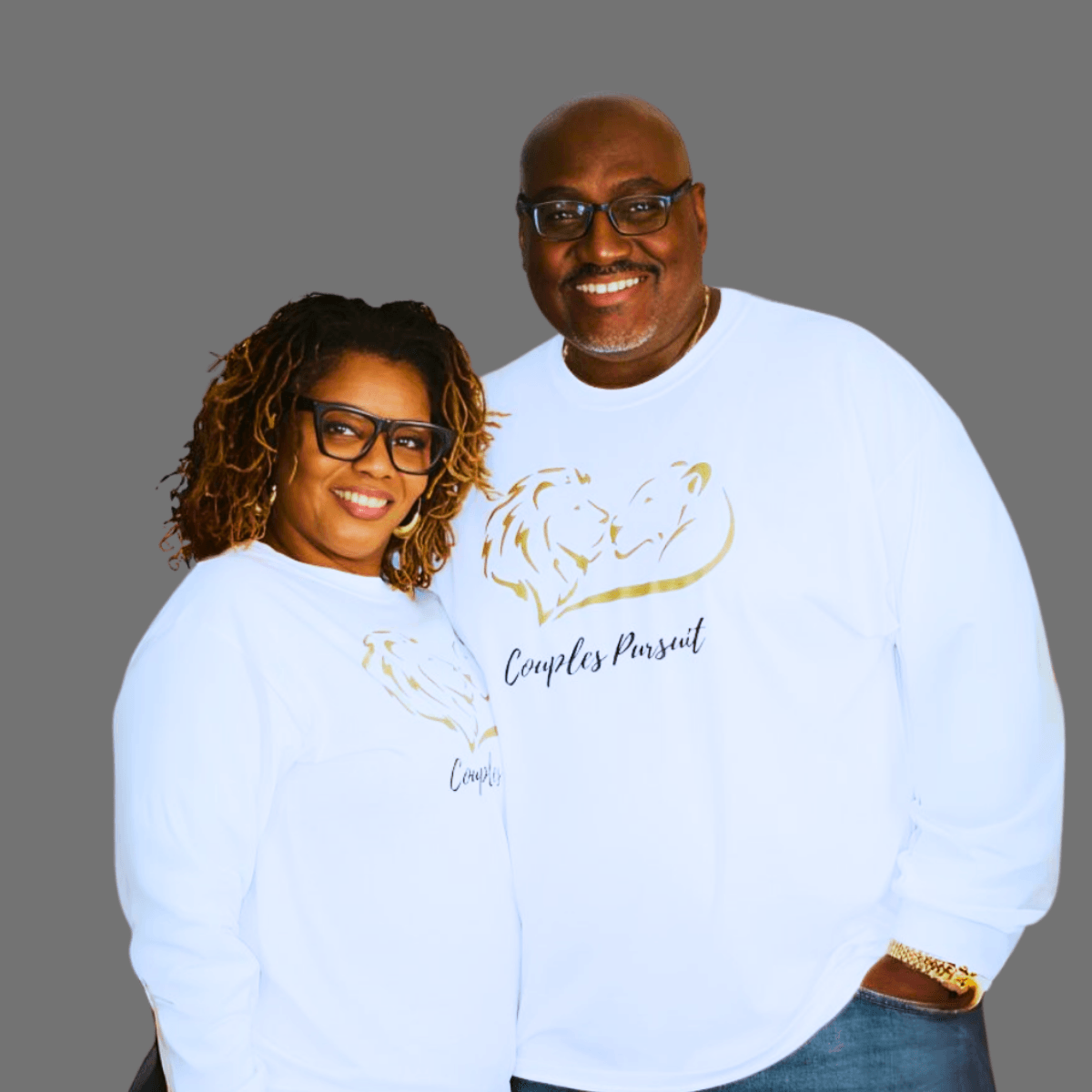
Vincent and Valerie Woodard are the founders of Couples Pursuit. Married since 2000, they specialize in restoring marriages that feel beyond repair using biblical principles. Connect with them at www.couplespursuit.com.
Want more posts like this one?
We send practical, biblical marriage help to your inbox.
No spam. Just honest content for real couples.
Need to Talk?
Are You Tired of Feeling Disconnected From Your Spouse or Future Spouse?
Book Your FREE 15-Minute
Strategy Session Today!
Our Coaching is based on:
The 5 Marriage Mandates™
Method
Many books offer quick fixes or surface-level advice. But “The 5 Marriage Mandates™” dives deep, addressing the real challenges couples face today.

What Is the Root Issue in Your Marriage?
Take the Free 5 Marriage Mandates™ Quiz. No right or wrong answers...
Just honest ones.

Are You Tired of Feeling Disconnected From Your Spouse or Future Spouse?

FREE 15-Minute Strategy Session
Book Your FREE 15-minute Relationship Restoration Roadmap call with Vincent & Valerie TODAY!
*We respect the rights of all individuals. However, our services may not be appropriate if you identify as LGBTQ, have an untreated addiction, are being physically abused, or are currently involved in an extramarital relationship.




Couples Pursuit is a subsidiary of Woodard Worldwide LLC.
@2026 Couples Pursuit | Privacy policy | Legal | Terms & Conditions